As 2026 planning estimates, professional sewage cleanup of one finished room commonly plans at $3,000 to $10,000, and a fully finished basement at $8,000 to $25,000 for extraction, removal, disinfection and drying alone. Rebuilding walls and floors is a separate bill. Clearing the line first usually plans at $200 to $450 in business hours.
- Sewage cleanup is priced in two phases: mitigation (extraction, tear-out, disinfection, drying) and rebuild.
- Finished space costs far more than bare concrete because porous materials have to be removed and replaced.
- Every day that wet material sits pushes the job toward mould remediation, the most avoidable extra.
- Line clearing, contents cleaning and rebuild are usually separate invoices, so ask what a quote leaves out.
- Sewer backup cover is an optional add-on in most Canadian home policies, so check yours before assuming the bill is covered.
01 /What does sewage cleanup usually cost in 2026?
Sewage cleanup usually plans between about $1,000 for a professional wash-down of a bare concrete area and $25,000 or more for a finished basement, before any rebuilding. The spread is wide because the price follows the materials that got wet, the square footage, and how long the water sat, not the volume of water itself.
| Scope | Typical planning range | What drives it |
|---|---|---|
| Clearing the blocked line before cleanup, business hours | $200 to $450 | Cleanout access, roots, after-hours premium |
| Owner cleanup of a small puddle on sealed concrete (supplies, PPE, rental vacuum) | $75 to $300 | Whether you already own boots, gloves and a wet/dry vacuum |
| Professional cleanup, unfinished area, hard surfaces only | $1,000 to $3,500 | Area, depth of sludge, access, disposal |
| Professional cleanup, one finished room | $3,000 to $10,000 | Carpet, drywall height removed, days of drying |
| Professional cleanup, whole finished basement | $8,000 to $25,000 | Square footage, bathrooms, cabinets, equipment days |
| Contents pack-out, cleaning or disposal | $1,000 to $5,000+ | Volume of belongings, what can be salvaged |
| Mould remediation when drying was delayed | $1,500 to $8,000+ | Area affected, containment needed |
| Rebuild of a finished basement (insulation, drywall, flooring, paint, trim) | $15,000 to $50,000+ | Finish level, flooring type, bathroom or kitchen fixtures |
The line-clearing figure matches the range used across the HAUSE sewer network for a main-line clearing from an accessible cleanout. Without a clear line, cleanup is money spent twice, which is why the emergency guide puts clearing ahead of everything else.
02 /Why does a finished basement cost so much more than bare concrete?
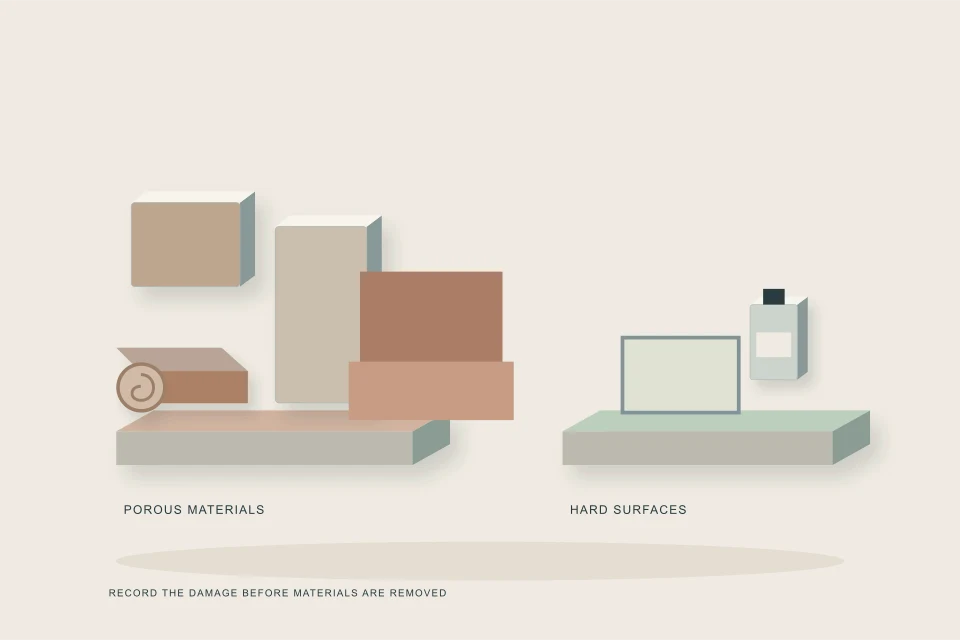
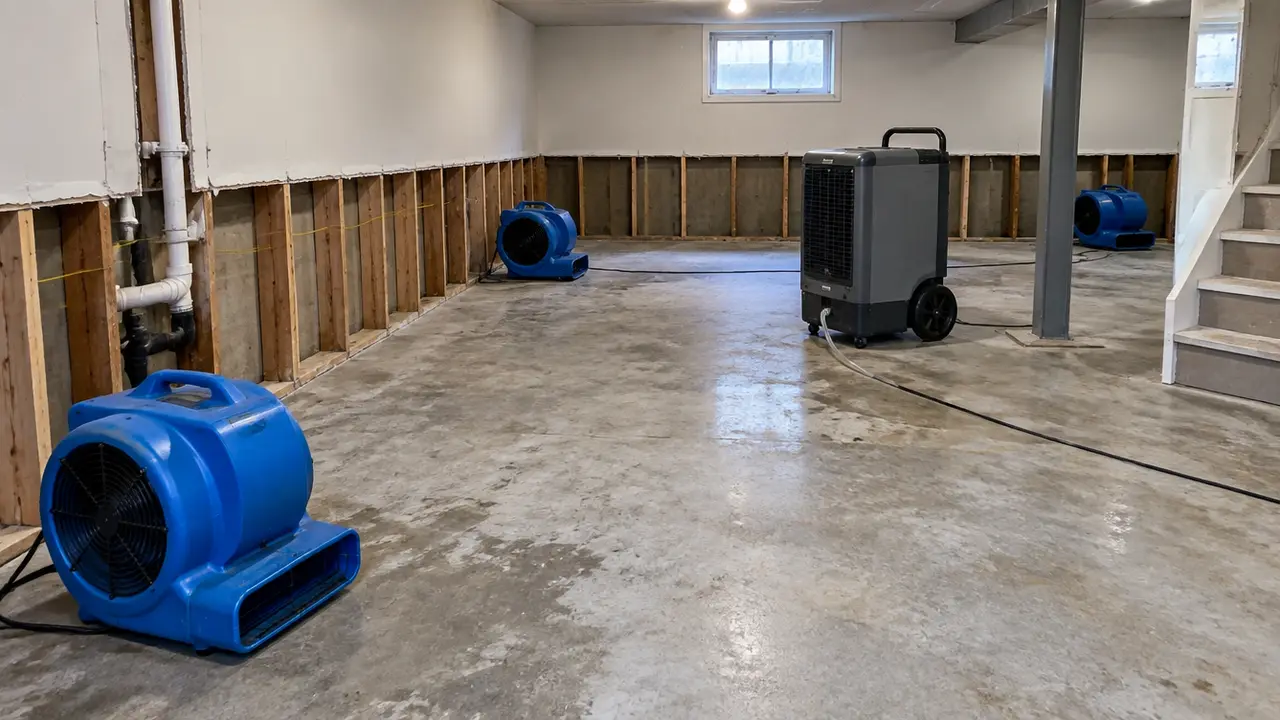
A finished basement costs more because sewage turns most finishes into waste. Sealed concrete can be scrubbed, rinsed and disinfected in place. Carpet, underlay, the bottom of the drywall, the insulation behind it, baseboards and particleboard cabinets soak up contaminated water and are normally cut out and bagged. Every item removed is labour, disposal and later a replacement.
- Bare concrete floor, block or poured walls: mostly washing, disinfecting and drying. Fast and comparatively cheap.
- Painted drywall on a stud wall with batt insulation: the wet band is cut out, typically with a margin above the waterline, and the cavity is dried and cleaned before it is closed again.
- Carpet and underlay: in sewage, both are normally discarded. Hard flooring over a subfloor may also have to come up if water got underneath.
- Built-ins: vanities, bars and lower cabinets made of particleboard swell and are rarely saved.
Which materials usually go, room by room, is in what to throw away after a sewage backup. That list is the single best predictor of the size of your bill.
03 /What moves a sewage cleanup quote up or down?
Five factors move almost every quote: the source of the water, the area, the materials, the time elapsed, and access. The first question a restorer asks is whether it was sewage, washing machine water or clean supply water, because that sets how much must be removed rather than dried.
| Factor | Pushes the price down | Pushes the price up |
|---|---|---|
| Water source | Clean supply water caught quickly | Sewage from a floor drain or toilet |
| Area | One corner of an unfinished room | Several rooms, stairs, a bathroom |
| Materials | Concrete, tile, sealed surfaces | Carpet, drywall, insulation, soft furniture |
| Time before work starts | Same day | Past 48 hours, with odour or visible growth |
| Access and logistics | Walk-out basement, clear floor | Narrow stairs, packed storage, no power |
| Timing | Weekday start | Nights, weekends, a regional storm that stretches every crew |
Regional storms matter more than people expect. When heavy rain overloads a city's system, hundreds of basements flood the same night and equipment is scarce. That is a scheduling problem, not a reason to pay any price quoted on the phone: ask for a written scope and use the cleanup triage tool to decide whether your job genuinely needs a crew.
04 /What should a sewage cleanup quote include?
A usable quote itemizes the mitigation work and states what is excluded. Restoration pricing is often built from line items for each task and each day of equipment, so two quotes with the same total can cover very different work.
- Extraction of standing water and sludge, with the area in square feet or square metres.
- Removal of named materials: carpet, underlay, drywall to a stated height, insulation, baseboards.
- Cleaning and disinfection of the remaining structure, with the product type named.
- Drying equipment: number of dehumidifiers and air movers and the expected number of days.
- Moisture readings at the start and at the end, recorded in writing.
- Disposal of contaminated waste.
- Clear exclusions: line clearing, contents, mould work, rebuild and any permits.
If a line reads only “sewage cleanup, basement” with a single number, ask for the breakdown. Restoration company selection is covered in more depth in working with a restoration company.
05 /Does home insurance pay for sewage cleanup?
Only if your policy includes sewer backup coverage. The Insurance Bureau of Canada says damage from backed-up sewers and drains is typically not covered by a standard policy, and that optional sewer backup coverage is offered by most insurers. Endorsements often carry their own limit and deductible, so read the declarations page, not just the policy title.
- Call your insurer or broker before large removals, and ask whether they want to see the damage first.
- Photograph everything, including the drain where the water came up, before anything is carried out.
- Keep every invoice separately: line clearing, mitigation, contents and rebuild are often assessed differently.
- Ask whether a backwater valve or sump requirement applies to your coverage going forward.
Evidence gathering is covered step by step in how to document water damage for insurance. If there is no coverage, the DIY versus professional guide explains which small jobs an owner can safely handle to keep costs down.
06 /How can you keep the cost of a sewage cleanup down?
Speed and scope are the two levers you control. Starting the drying within the first day or two protects materials that might otherwise have to be removed, and a tight written scope stops the job from drifting.
- Stop the source first
Stop all water use and get the line cleared, or the cleanup can be flooded again the same day.
- Move dry belongings up and out
Anything that has not touched the water and is carried out early is one less item to clean or claim.
- Document, then remove
Photos first; then soaked carpet and underlay can come out to speed up drying if your insurer agrees.
- Keep the air dry
Once the power is confirmed safe, dehumidification is the cheapest insurance against mould.
- Prevent the repeat
A camera inspection to find the cause and a maintained backwater valve cost a fraction of a second cleanup.
For the full cleanup scope of a house or a business, see residential sewage cleanup and commercial sewage cleanup. When you are ready, you can send a request with photos and the area affected.
FAQQuestions people ask
What is a typical price to clean up sewage in one basement room?
As a 2026 planning estimate, a finished room plans at about $3,000 to $10,000 for extraction, removal, disinfection and drying. An unfinished room with a concrete floor usually sits well below that.
Is the rebuild included in a sewage cleanup quote?
Usually not. Mitigation and rebuild are commonly separate phases and often separate invoices. Ask the quote to state clearly whether drywall, flooring and paint are included.
Why did my sewage cleanup quote list so many equipment days?
Drying is billed per machine per day in many quotes. Ask for the moisture readings that justify each extra day and the target reading that ends the drying.
Does it cost more to clean up sewage than clean water?
Yes, usually several times more, because sewage-soaked porous materials are removed and bagged rather than dried in place, and crews work in protective gear.
Who pays to clear the line before cleanup?
Usually the owner, unless the blockage is on the municipal side. Cities handle their own side differently, so call your municipality, often through 311, if you suspect the city main.
Can I lower the bill by doing part of the cleanup myself?
Sometimes, on a small hard-surface area with no vulnerable people in the home. Talk to your insurer first, because unrecorded removals can complicate a claim.
NETWORKGo deeper across the HAUSE Sewer network
How to clean up after a sewer backup in the basement
How to clean a sewer backup in a basement: when to do it yourself, gear you need, removing soaked materials, cleaning, disinfecting, drying and rebuilding.
SewerRoots.caDoes home insurance cover tree roots in a sewer line?
Does home insurance cover tree roots in a sewer line in Canada? Why root cutting and pipe repair are usually excluded, and what backup endorsements pay.
SewerQuotes.comSewer cost estimator
Free sewer cost estimator: choose the job, length, depth, access and surface to get a CAD planning range with the cost drivers behind it, then test real quotes.