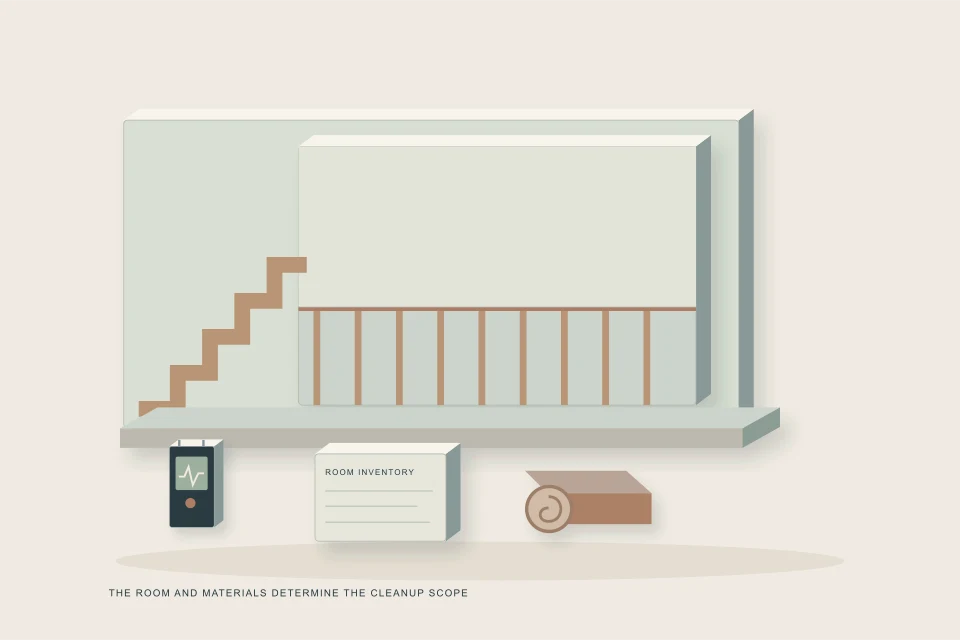
Residential sewage backup cleanup removes the sewage, strips out porous materials it soaked, cleans and disinfects what remains, and dries the structure to normal moisture before anything is rebuilt. A complete job includes extraction, removal and disposal, disinfection, odour control through source removal, monitored drying with readings, and a written record your insurer can use. Rebuild is usually a separate phase.
- A home sewage cleanup has five core parts: extraction, removal, disinfection, drying and documentation.
- Odour goes away when contaminated material is removed and the space is dry, not when it is perfumed.
- Basement suites, condos and older homes each add steps: tenants, building managers or hazardous-material testing.
- Moisture readings at the start and end are the proof that drying is finished.
- Line clearing, contents cleaning and rebuild are separate scopes and often separate invoices.
01 /What does a residential sewage cleanup include?
A residential sewage cleanup includes everything between a clear drain and a dry, clean structure ready for rebuild. The earlier SewageCleanup.ca page listed extraction, sanitization, odour removal, structural drying, disposal of contaminated materials and basic repairs; those are still the right components, set out below with what each should actually involve.
| Component | What it involves | What to ask |
|---|---|---|
| Extraction | Pumping and vacuuming standing sewage and sludge from floors and low spots | How will sludge be contained and disposed of? |
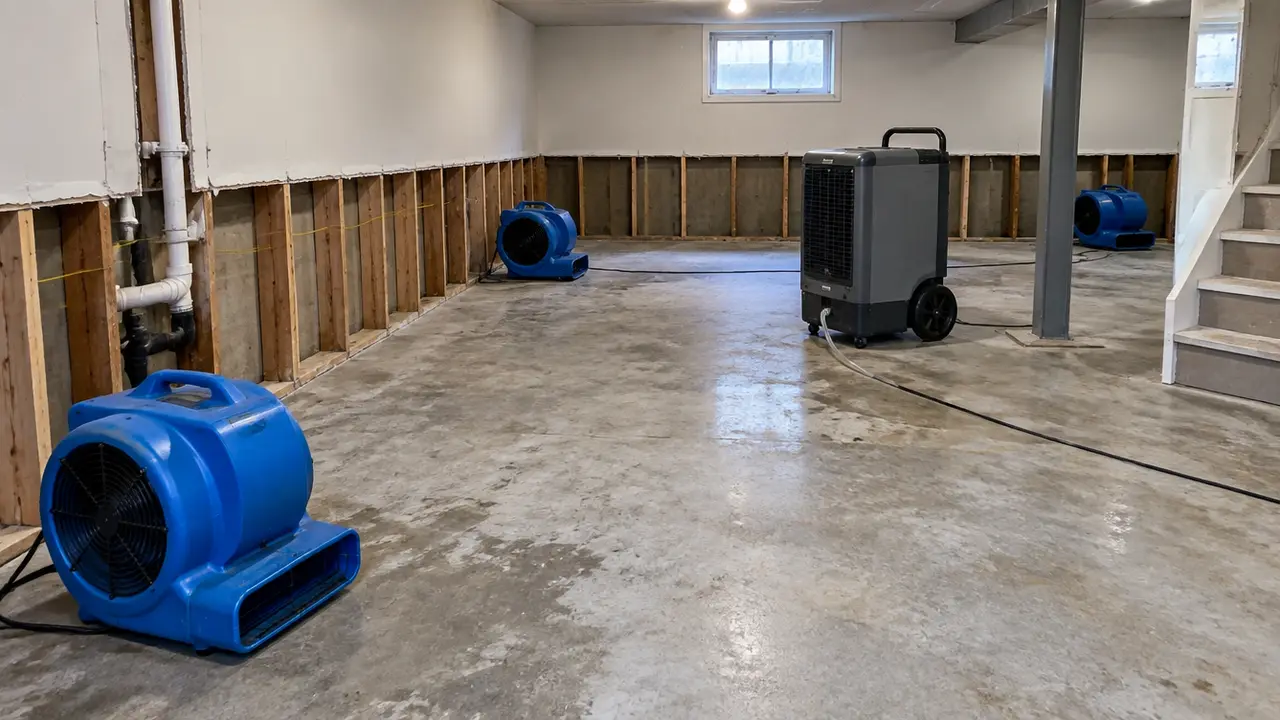
| Removal and disposal | Cutting out and bagging carpet, underlay, lower drywall, insulation, baseboards and soaked contents | To what height will drywall be cut, and why? |
| Cleaning and disinfection | Washing residue off hard surfaces with detergent, then applying a disinfectant | Which product, and for how long does it stay wet on the surface? |
| Odour control | Removing the source, drying, and cleaning the air with filtration where needed | What is being removed, not just what is being sprayed? |
| Structural drying | Dehumidifiers and air movers run until materials reach normal moisture | What reading ends the drying, and who records it? |
| Documentation | Photos, moisture logs, an itemized scope and a list of discarded items | Will I get copies for my insurer? |
Rebuilding the walls, floors and finishes is normally quoted as a second phase once the structure is dry. Clearing the blocked line comes before all of it and is done by a drain or sewer contractor. For planning ranges on each phase, see the sewage cleanup cost guide.
02 /How does a home sewage cleanup usually unfold?
A typical basement job moves through a predictable sequence over several days, although large or delayed losses take longer. Knowing the order helps you judge whether the work is on track.
- Day 0: line cleared and damage recorded
The drain is opened and tested, and photos are taken before anything is removed.
- Day 0 to 1: extraction and tear-out
Standing sewage is removed, then soaked porous materials are cut out and bagged.
- Day 1: cleaning and disinfection
Hard surfaces are washed with detergent, rinsed and disinfected, including the slab, framing and any salvageable items.
- Days 1 to 5: drying
Equipment runs with daily or regular moisture readings until materials reach target levels.
- Final check
Readings are recorded, the space is inspected for odour and visible growth, and the rebuild scope is written.
Health Canada says a house and its furnishings are less likely to grow mould if they are dried within 48 hours, which is why the first two days carry the most weight. The drying and mould guide explains moisture readings and when drying is really finished.
03 /How do houses, basement suites and condos differ?
The cleanup method is the same, but the people and the paperwork change with the type of home. Plan for the extra step your home adds before the crew arrives.
| Home type | Extra step | Why |
|---|---|---|
| Detached house with a finished basement | Check the furnace, water heater and electrical before drying equipment runs | These usually sit in the flooded area |
| House with a rented basement suite | Notify tenants, arrange temporary housing if the suite is unusable | Tenants' belongings and safety are involved; their contents insurance is separate |
| Condo or apartment | Report to the property manager first | Common pipes and the building's policy may be involved |
| Townhouse or row house | Warn neighbours who may share a line | Water use next door can keep feeding the backup |
| Older home, roughly pre-1990 | Ask about testing before disturbing old flooring, plaster or insulation | Some older building materials can contain asbestos |
Houses with a separate basement suite deserve extra thought. The suite often sits at the lowest level, right beside the floor drain, and its tenants may lose their kitchen, bathroom and bedroom at once. Give them written notice of what is happening and when, and keep their belongings out of your own claim inventory; they are claimed on the tenant's own policy.
Tenant, landlord and condo roles are also covered on the locations page, because cities route requests through the property owner.
04 /What should you do before the cleanup crew arrives?
Before the crew arrives, make the space safe, stop the water, and record the damage; do not start heavy tear-out on your own unless your insurer agrees. A few preparations speed the job up and protect your claim.
- Confirm the line has been cleared and stop all water use until it has.
- Photograph every room, the drain where sewage came up, and damaged belongings, including serial numbers on appliances.
- Carry dry, untouched items out of the basement to a clean area.
- Clear the route from the door to the basement so equipment and waste bags can move easily.
- Find the electrical panel, the main water valve, the floor drain and any backwater valve or cleanout, so you can point them out.
- Keep children, pets and anyone vulnerable out of the area.
The Sewage Backup Checklist keeps timestamps as you go, and the Sewage Cleanup Triage helps decide whether a crew is needed at all.
05 /How is sewage odour removed from a house?
Sewage odour is removed by taking out the material that holds it and drying the structure, not by covering it. The smell lives in wet carpet, underlay, drywall paper, insulation and sludge in corners. Once those are gone and the remaining surfaces are cleaned, disinfected and dry, the odour usually fades within days.
Air filtration can help during the work. Scented sprays and deodorizers only mask the smell and can hide the fact that wet material remains. If a contractor proposes an odour treatment, ask what it is, why it is needed after source removal, and whether anyone must stay out of the house while it is used. A smell that persists after drying usually means a missed wet area, such as under a bottom plate, inside a cabinet base or below a floating floor.
06 /Can you do some of the cleanup yourself?
Sometimes. A small patch of sewage on a sealed concrete floor, in a home where nobody vulnerable lives, is a reasonable owner job with the right protection. Anything that soaked into carpet, drywall or furniture, a large area, or a delay past 48 hours points to a professional.
Health Canada's guidance is that children, pregnant women and people with respiratory problems should never handle sewage-contaminated water or materials, and that local public health should be contacted where sewage is involved. The full comparison is in DIY versus professional sewage cleanup. Choosing and managing a contractor is in working with a restoration company, and you can send a request with photos when you are ready.
FAQQuestions people ask
How long does a home sewage cleanup take?
Extraction and tear-out often take a day; drying commonly runs several days. Large, finished or delayed losses take longer, and the rebuild adds weeks.
Do I have to leave my house during sewage cleanup?
Not always. If the sewage is confined to the basement and nobody vulnerable lives there, many families stay upstairs. Leave if the odour is strong, power is off or the living space is affected.
Will the cleanup company fix my drain too?
Usually not. Clearing the line is done by a drain or sewer contractor. The cleanup company deals with the building and contents after the line flows.
Can hardwood or laminate be saved after sewage?
Rarely. Sewage gets under and between boards where it cannot be cleaned, so most restorers remove it. Sealed tile over concrete is more often cleaned in place.
What paperwork should I get at the end of a residential cleanup?
An itemized scope, photos, a list of discarded materials and contents, and moisture readings from the start and the finish.
NETWORKGo deeper across the HAUSE Sewer network
How to clean up after a sewer backup in the basement
How to clean a sewer backup in a basement: when to do it yourself, gear you need, removing soaked materials, cleaning, disinfecting, drying and rebuilding.
DrainAugering.caHow to clean, dry and store a drain auger so it lasts
How to clean a drain auger or toilet auger after use: rinsing, disinfecting, drying and oiling the cable, checking for kinks, and knowing when a snake is done.
PipeCleaning.caCondo and apartment drain stack cleaning
Condo and apartment drain stack cleaning: why kitchen stacks back up on lower floors, how stacks are jetted or descaled, and how boards schedule it.