A careful owner can clean a small patch of sewage on sealed concrete or tile, in a home with no vulnerable people, if it is dealt with within a day. Call a professional when sewage soaked into carpet, drywall or furniture, when several rooms or a finished basement are affected, when more than 48 hours have passed, or when children, pregnant people, older adults or anyone immunocompromised live there.
- Four triggers point to a professional: sewage in porous materials, a large area, more than 48 hours, or vulnerable people at home.
- Owner cleanup is realistic only for small spills on hard, sealed surfaces, done promptly and with full protection.
- The biggest DIY risk is hidden moisture in walls and under floors, which leads to mould and odour later.
- Doing the work yourself can complicate a claim unless your insurer agrees first.
- The Sewage Cleanup Triage tool applies these rules to your situation in under a minute.
01 /When can you clean up sewage yourself?
You can reasonably clean up sewage yourself when the spill is small, confined to hard sealed surfaces, dealt with quickly, and nobody vulnerable lives in the home. A floor drain that burped a few litres onto a bare concrete slab and stopped, in a house of healthy adults, fits that description.
| Question | Leans DIY | Leans professional |
|---|---|---|
| What came up? | A small amount of sewage, or washer water | Sewage in any quantity beyond a small puddle |
| What did it touch? | Concrete, tile, sealed floor only | Carpet, underlay, drywall, insulation, furniture, boxes |
| How big is the area? | A puddle or one corner | Several rooms or a finished basement |
| How long ago? | Under 24 hours | More than 48 hours |
| Who lives there? | Healthy adults | Young children, pregnancy, older adults, weakened immunity |
| Is the line clear? | Yes, confirmed | Unknown, or still backing up |
These are the same rules the Sewage Cleanup Triage uses. A single answer in the right-hand column is enough to call a professional; the tool does not average them out.
02 /Why do porous materials change the answer?
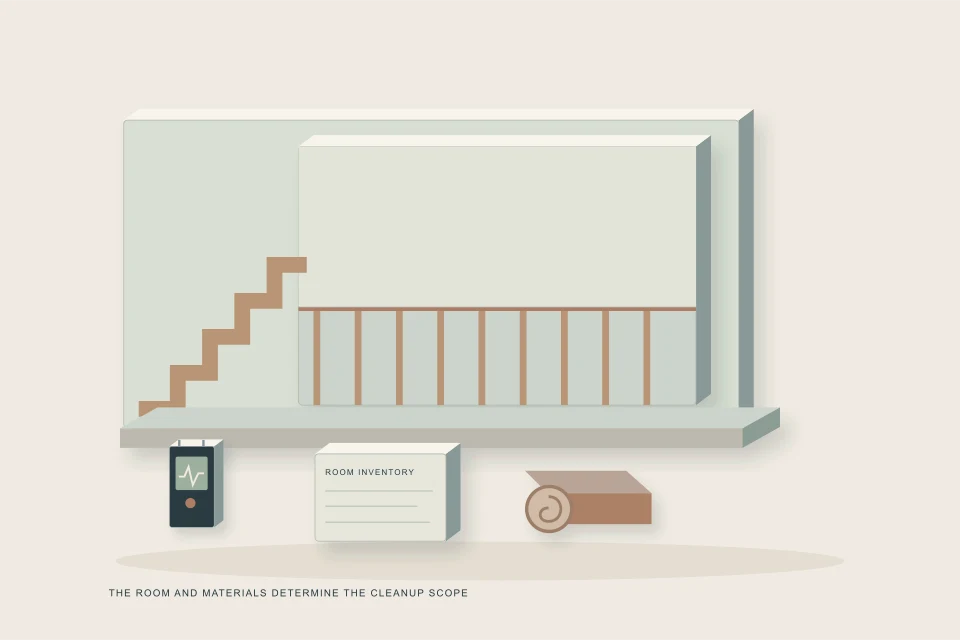
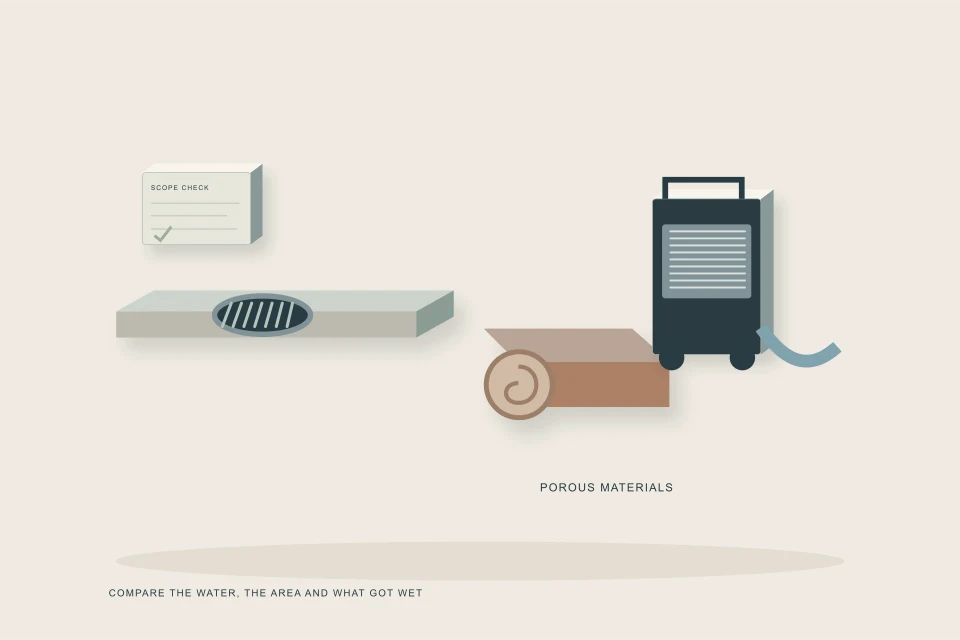
Porous materials change the answer because sewage soaks into them and cannot be reliably cleaned out. Carpet fibres, underlay foam, the paper face and gypsum core of drywall, and batt insulation all hold contaminated water deep inside. Public guidance from Health Canada and CMHC lists carpets, insulation, drywall, particleboard furniture and mattresses among the items to discard after flooding.
Removing them properly is where DIY jobs go wrong. Cutting drywall to the right height, bagging it without spreading residue, getting the wet insulation out of every stud bay, then cleaning and disinfecting the framing and slab behind it takes tools, time and a tolerance for hard, dirty work. CMHC suggests removing drywall to at least 30 cm above the flood line; Montréal's guidance says at least 50 cm. Water also wicks up inside the wall, so the visible tide line understates the damage.
03 /How do you safely clean a small sewage spill yourself?
Clean a small hard-surface spill in a fixed order: protect yourself, remove the bulk, wash, disinfect, rinse where needed, and dry. Keep children and pets away throughout, and do not start until the line is confirmed clear.
- Gear up
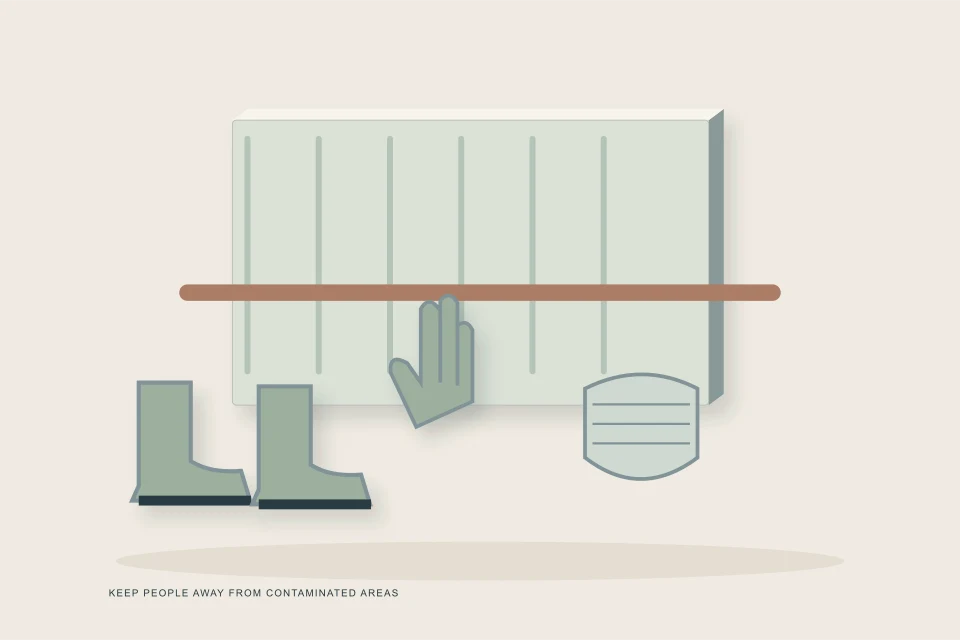
Rubber boots, waterproof gloves, goggles and an N95 respirator. Cover any cuts.
- Ventilate
Open windows if outdoor air is dry, and use a fan only if the outlet and cord are well away from any water.
- Remove the liquid and solids
Use a wet/dry vacuum, a squeegee toward the floor drain, or disposable absorbent material bagged immediately.
- Wash with detergent
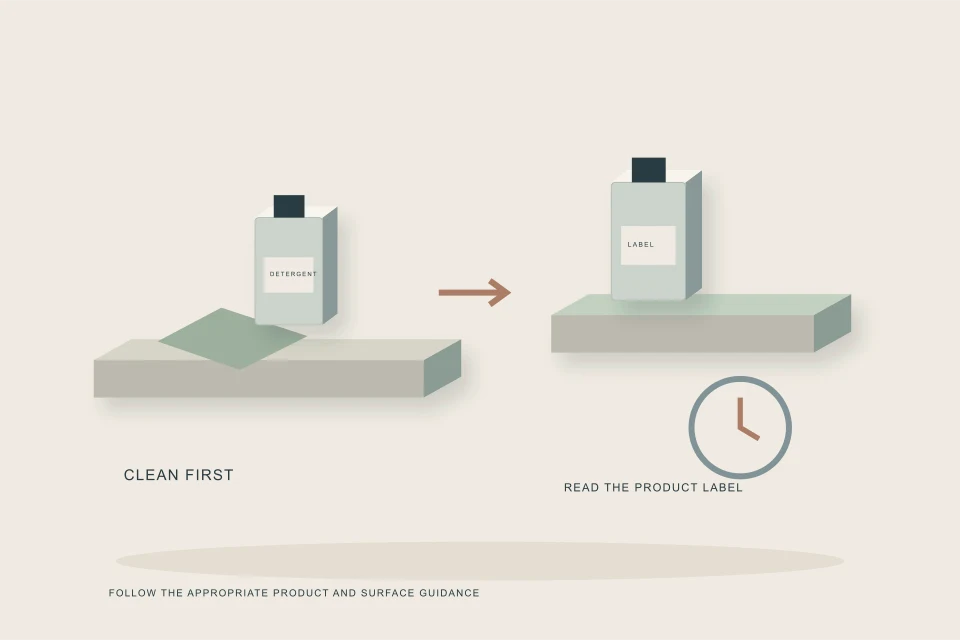
Scrub the floor and lower walls with detergent and water. Disinfectant does not work well on a dirty surface.
- Disinfect
Apply a disinfectant following the label, including the time it must stay wet. Toronto's guidance gives one cup of household bleach in five gallons of water as an example. Never mix bleach with ammonia or other cleaners.
- Dry and check
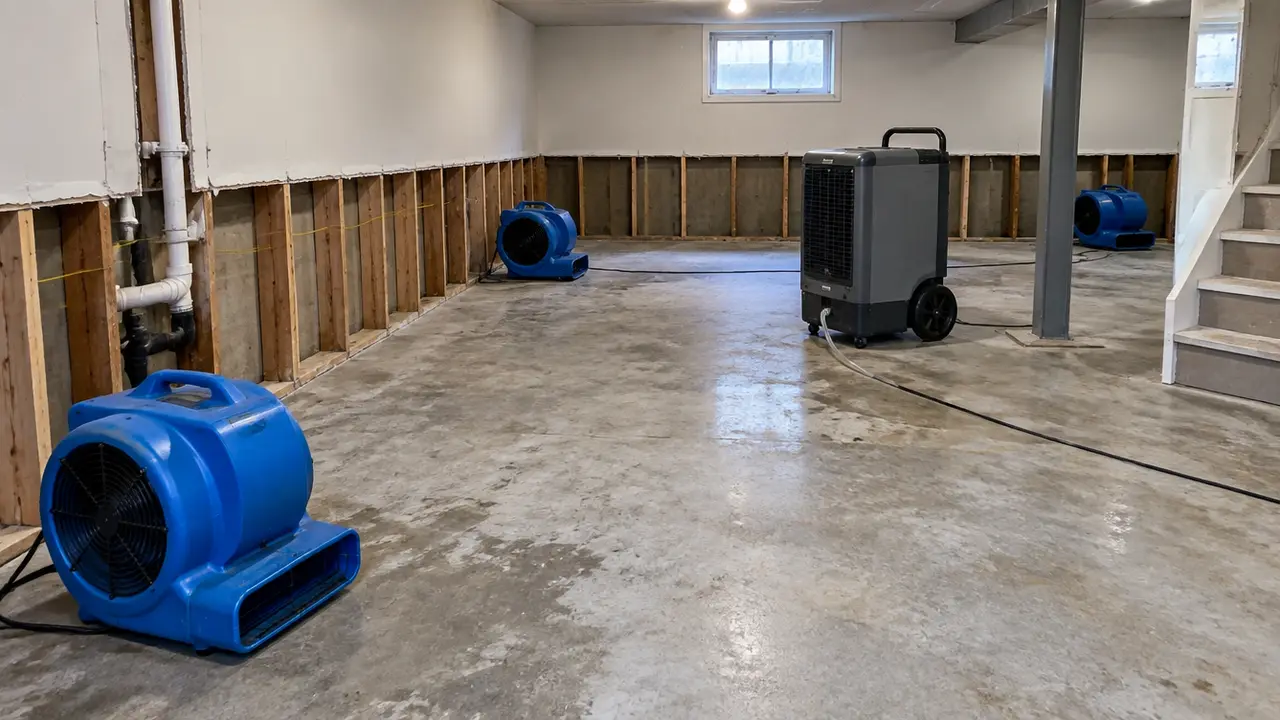
Run a dehumidifier until the area is dry, then check the next day for dampness or odour.
Clean the wet/dry vacuum, squeegee and boots the same way before storing them, and wash work clothes separately. The method in more detail, including salvageable items, is in disinfecting after a sewage backup.
04 /What does a professional do that you cannot?
A professional brings capacity, equipment and measurement. The difference is most visible in the drying, which is where DIY jobs usually fail weeks later.
Health Canada's mould guidance uses a size threshold that is a useful parallel: small and medium patches of mould can be cleaned by occupants, but an extensive area over about 3 square metres calls for professionals. Sewage raises the stakes further, because the contamination starts before any mould does.
05 /Is DIY sewage cleanup cheaper?
For a truly small hard-surface spill, yes: the planning cost is mostly protective gear, detergent, disinfectant and perhaps a rented wet/dry vacuum, roughly $75 to $300. For anything involving finished materials, DIY often only moves the cost later, when hidden moisture shows up as odour, mould or a denied claim.
If you have sewer backup coverage, talk to your insurer before doing the work yourself. Some insurers want to see the damage or approve the approach first, and undocumented removals are hard to value later. The full cost picture is in the sewage cleanup cost guide, and the evidence you need is in documenting water damage for insurance.
06 /What equipment does a small owner cleanup need?
A small owner cleanup needs less equipment than people expect, but every item matters. Gather it before you start so you are not walking in and out of the contaminated area.
| Item | Purpose | Note |
|---|---|---|
| Rubber boots and waterproof gloves | Keep sewage off skin | Heavy work gloves over the top for debris |
| Goggles and an N95 respirator | Protect eyes and airways from splashes and droplets | Fit the mask properly |
| Wet/dry vacuum or squeegee | Remove liquid toward the drain or into the tank | Only once the line is confirmed clear |
| Heavy garbage bags | Bag absorbent material and disposable gear | Double-bag anything wet |
| Unscented detergent, buckets, stiff brushes | The cleaning step | Two buckets: wash and rinse |
| An authorized disinfectant | The disinfecting step | Follow the label contact time |
| Dehumidifier and a hygrometer | Drying and checking humidity | Aim for 30 to 50 per cent relative humidity |
If you find yourself needing more than this list, such as a saw for drywall, a pry bar for flooring or several dehumidifiers, the job has probably outgrown an owner cleanup.
07 /When should you stop a DIY cleanup and call for help?
Stop and call for help when the job turns out bigger than it looked. That happens more often than people expect, because water travels under flooring and up inside walls.
- Water appears under laminate, vinyl plank or baseboards you thought were dry.
- The drywall is wet higher than the visible tide mark.
- The odour is still strong a day after cleaning.
- The drain gurgles or backs up again, meaning the line is not truly clear.
- Anyone doing the work feels unwell.
- You find materials in an older home that might contain asbestos and would need to be disturbed.
Choosing a contractor is covered in working with a restoration company, and home cleanup scope in residential sewage cleanup. If you want help lining one up, you can send a request with photos.
FAQQuestions people ask
Can I use a shop vacuum to clean up sewage?
Yes, for liquid on hard surfaces, if it is rated for wet use, plugged in well away from water, and cleaned and disinfected afterward. It will not dry carpet or walls.
Is bleach enough to make sewage-soaked carpet safe?
No. Carpet and underlay touched by sewage are normally discarded, because contamination sits deep in the fibres and foam where disinfectant cannot reliably reach.
Will my insurer pay if I clean up the sewage myself?
It depends on your coverage and your insurer. Call first, document everything, and ask whether they will reimburse your own time, supplies or equipment rental.
How do I know my basement is dry after a DIY cleanup?
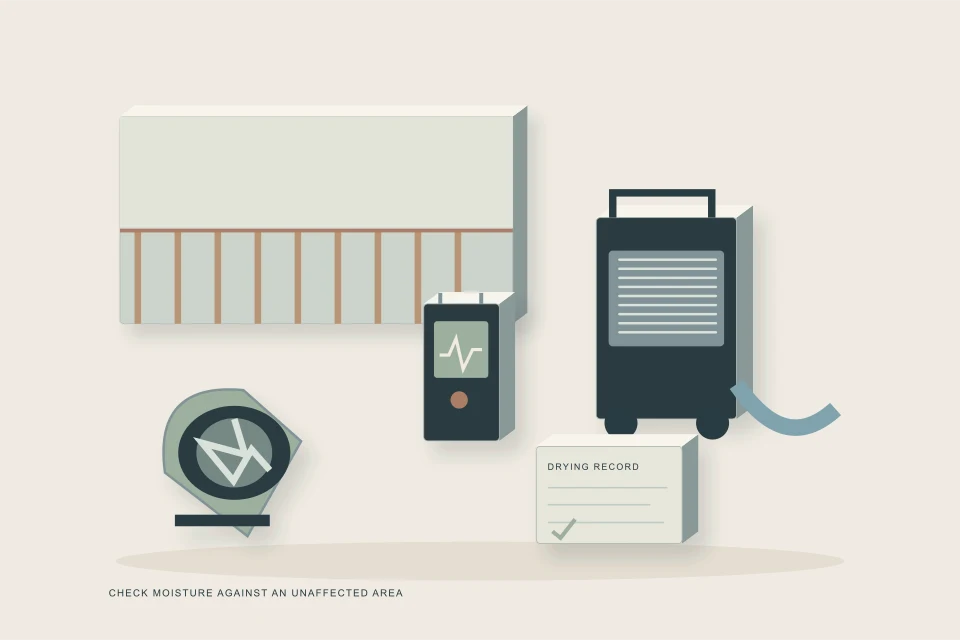
Touch is unreliable. A moisture meter, or a professional reading, compared with an unaffected area of the same material, tells you whether it has returned to normal.
NETWORKGo deeper across the HAUSE Sewer network
How to clean up after a sewer backup in the basement
How to clean a sewer backup in a basement: when to do it yourself, gear you need, removing soaked materials, cleaning, disinfecting, drying and rebuilding.
SewerQuotes.comHow to pay for sewer repair: deposits, payment schedules and financing
How to pay for sewer line repair or replacement in Canada: reasonable deposits, milestone payment schedules, financing options and staging the work.
PipeCleaning.caPipe cleaning methods compared, method by method
Pipe cleaning methods compared: snaking, hydro jetting, descaling, chain knockers, enzymes and chemicals — what each removes, and which pipes each can harm.