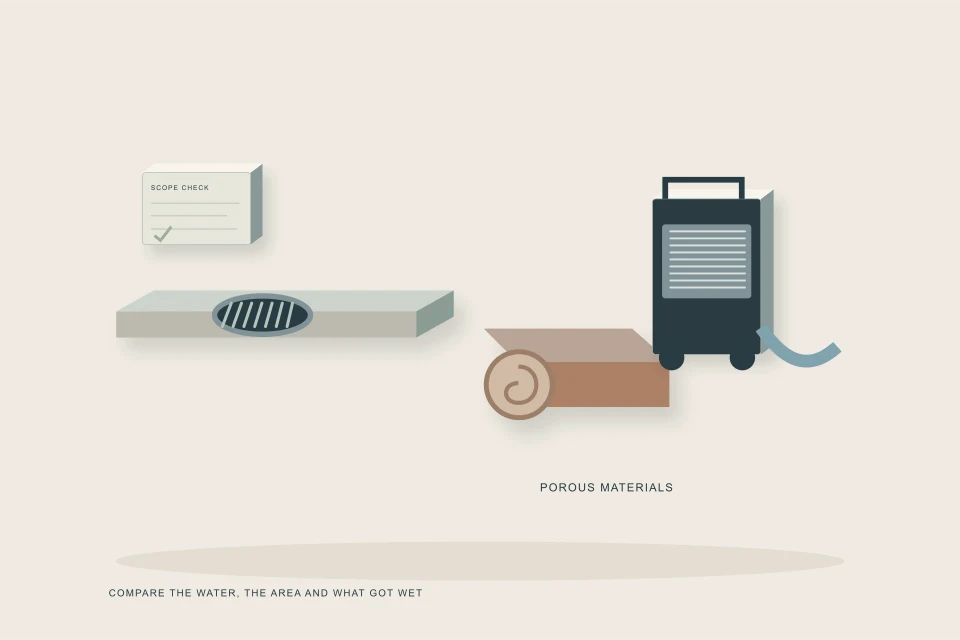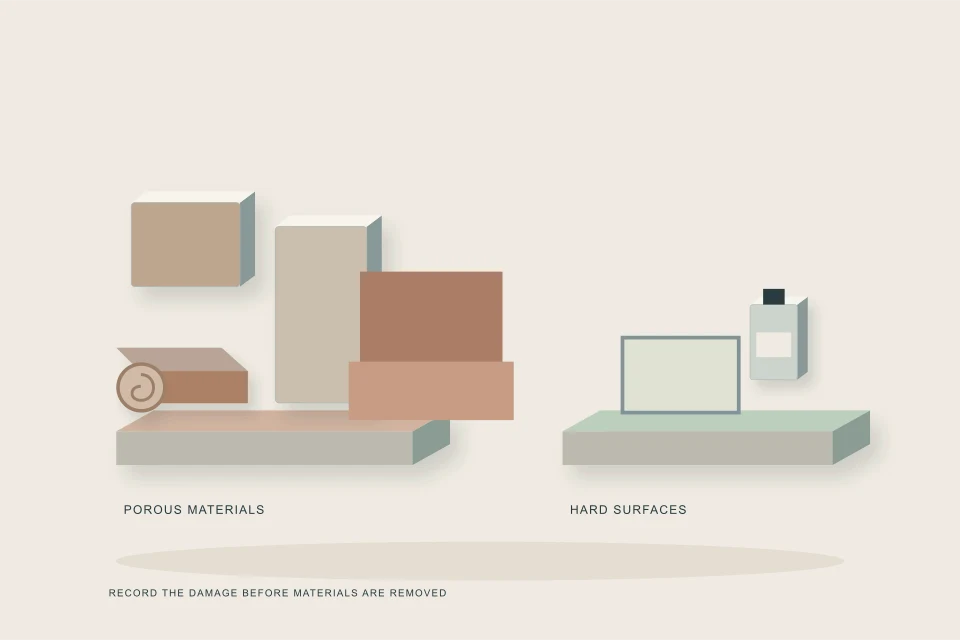
After a sewage backup, throw away porous items that sewage soaked: carpet and underlay, drywall and insulation to above the wet line, mattresses, upholstered furniture, particleboard, cardboard, stuffed toys, and any food, medicine or cosmetics it touched. Hard non-porous items such as metal, glass, sealed plastic and solid wood can usually be cleaned and disinfected. Photograph everything before it goes.
- The rule of thumb is porous and soaked goes; hard and sealed can be cleaned.
- Drywall and insulation are cut out above the wet line, with a margin: at least 30 cm per CMHC, 50 cm per Montréal.
- Food, medicines, cosmetics and baby items touched by sewage are always discarded.
- Appliances that sewage reached need a qualified check before use, and some are not worth saving.
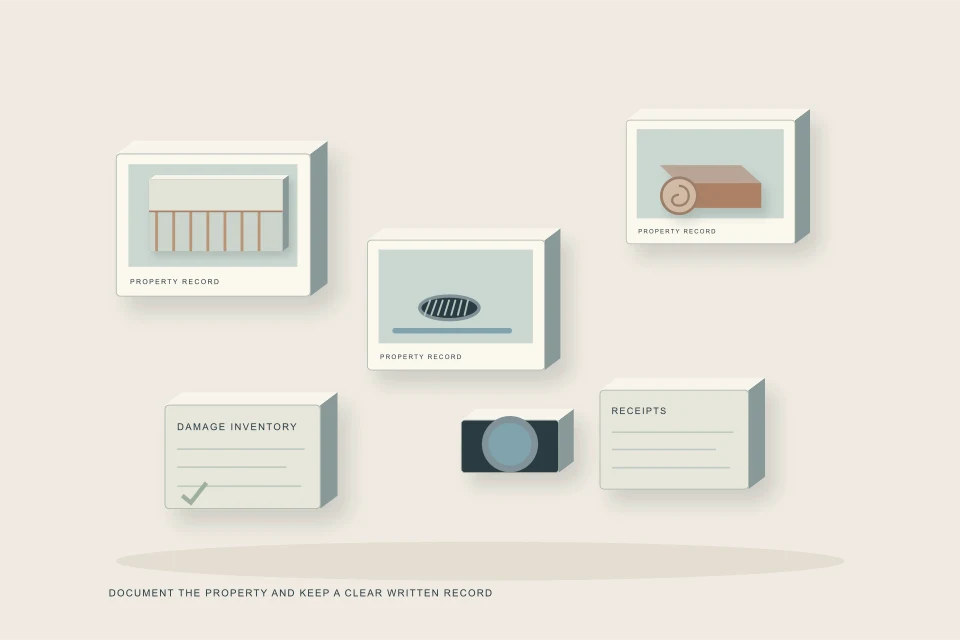
- Photograph, list and, where your insurer asks, keep samples before anything leaves the house.
01 /How do you decide what to keep and what to throw away?
Decide by asking two questions about each item: did sewage actually reach it, and can its surface be fully cleaned and disinfected? If sewage reached it and the answer to the second question is no, it goes. Porous materials that absorb water fail that test; hard, non-porous surfaces usually pass.
| Material type | Examples | Usual outcome if sewage reached it |
|---|---|---|
| Absorbent and soft | Carpet, underlay, mattresses, pillows, upholstered furniture, stuffed toys | Discard |
| Paper-based | Drywall, cardboard boxes, books, paper files, ceiling tiles | Discard; copy important documents first if possible |
| Pressed wood | Particleboard and MDF furniture, cabinet boxes, laminate flooring core | Discard |
| Insulation | Batt, loose-fill, some rigid foam behind drywall | Remove wet sections |
| Solid wood | Solid wood furniture, framing, stairs | Clean, disinfect and dry if structurally sound |
| Hard non-porous | Metal, glass, ceramic, hard plastic | Clean and disinfect |
| Consumables | Food, medicine, cosmetics, toiletries | Discard if exposed |
Health Canada's flood cleanup guidance lists insulation, drywall, carpets, particleboard furniture, mattresses and stuffed items among the things to discard after flooding, and CMHC gives a very similar list. With sewage, apply those lists strictly.
02 /How much drywall and insulation should be removed?
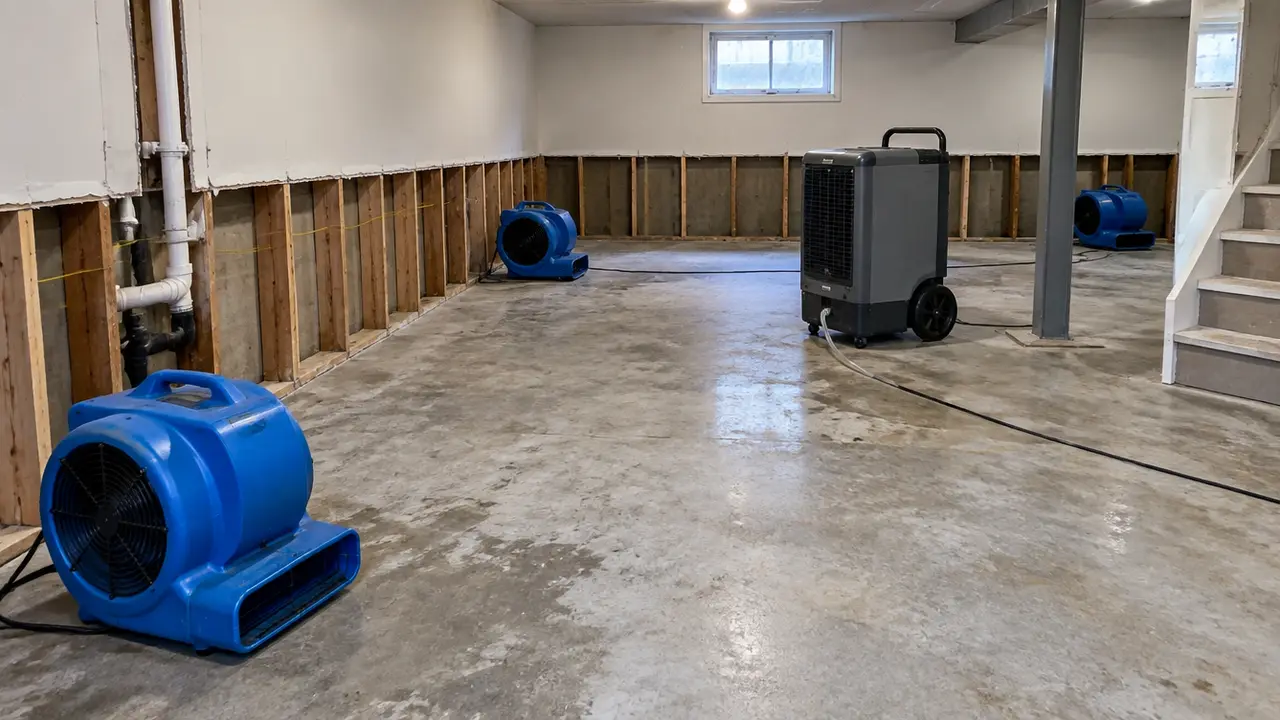
Remove drywall and insulation to a line above the highest point the water reached, not just to the visible stain. Water climbs inside the gypsum and insulation by capillary action, the wick line, so the damage extends above the tide mark on the paint.
- CMHC's flood cleanup advice is to remove drywall to at least 30 cm above the flood line.
- The City of Montréal's post-flood guidance says drywall and insulation should come out at least 50 cm, about 20 inches, above the water level.
- Many restorers cut at a consistent height across a whole wall for a clean rebuild, even where water was lower in places.
- Wet insulation is pulled from every affected stud bay, and the bottom plate and studs are cleaned, disinfected and dried before anything is closed in.
With sewage, the higher margin is the safer choice, because a missed band of wet drywall stays contaminated and becomes a mould and odour source inside the wall.
03 /What happens to flooring after a sewage backup?
Most flooring touched by sewage comes out. The exception is a hard, sealed surface bonded directly to concrete, such as ceramic tile, that can be scrubbed and disinfected in place.
| Flooring | Usual outcome | Why |
|---|---|---|
| Carpet and underlay | Discard both | Holds contamination deep in fibres and foam |
| Laminate | Discard | Fibreboard core swells; sewage sits underneath |
| Vinyl plank or sheet over concrete | Usually lifted | Sewage gets under the edges and cannot dry there |
| Engineered or solid hardwood | Usually discarded | Absorbs water and traps contamination between boards |
| Ceramic or porcelain tile on concrete | Often cleaned in place | Non-porous; grout needs thorough cleaning |
| Bare or sealed concrete | Cleaned and disinfected | Durable; dries well with dehumidification |
| Subfloor over sleepers or a raised system | Often removed | Water collects in the cavity beneath |
Photograph the flooring and note its square footage before removal, and keep a labelled offcut if your insurer asks for one. Removal of flooring is also the single biggest driver of cleanup cost; see the sewage cleanup cost guide for planning ranges.
04 /Which household items can be cleaned and kept?
Items with hard, non-porous surfaces can usually be kept after a thorough wash and disinfection. The effort is worth it for valuable or sentimental items, but for cheap goods the time is often better spent elsewhere.
- Metal tools, shelving and bicycles: wash, disinfect, rinse and dry quickly to prevent rust.
- Glass, ceramics and dishes: wash in hot soapy water, then disinfect, or run through a sanitizing dishwasher cycle.
- Hard plastic bins and toys: clean and disinfect if they have no crevices or foam. Discard soft, stuffed or bath toys that hold water.
- Solid wood furniture: clean, disinfect and dry slowly; upholstered seats and particleboard parts go.
- Clothing and linens: a hot wash can save some items that were splashed rather than soaked; items soaked in sewage are often not worth the risk.
- Photographs and documents: rinse gently, freeze in sealed bags if you cannot deal with them right away, and ask a conservator about irreplaceable items.
How to clean and disinfect what stays, and which disinfectants to use, is in disinfecting after a sewage backup.
05 /What about food, medicine and children's items?
Discard all food, medicine, cosmetics and toiletries that sewage touched, including sealed packages where water could have reached the seal. Montréal's post-flood guidance specifically lists food, medications, toiletries and cosmetics among the things to remove.
Be especially strict with anything that goes in a child's mouth: bottles, soothers, teething toys and soft toys. Unopened commercially canned goods are sometimes cleaned and kept under public-health guidance, but if you are unsure, your local public health unit can advise, and throwing them out is always the safe choice.
06 /What about appliances and mechanical equipment?
Appliances that sewage reached need a qualified check before they are used again, and small appliances are often not worth saving. Water can damage controls, motors and insulation inside units in ways you cannot see.
| Equipment | Next step |
|---|---|
| Furnace or boiler | Have a qualified technician inspect before restarting |
| Gas water heater | Have the burner and controls inspected before use |
| Washer and dryer | Have them checked; clean and disinfect the drum and exterior if kept |
| Freezer or fridge | Discard exposed food; have the unit checked; insulation may hold contamination |
| Small appliances and electronics | Usually replaced; photograph serial numbers first |
| Sump pump | Test, clean and confirm the float moves freely |
Montréal's guidance is to discard flooded appliances or have a repairer check them, and to have gas and heating equipment inspected. The same caution applies anywhere in Canada.
07 /How do you dispose of sewage-contaminated items?
Bag soft contaminated items in heavy plastic, keep them outside the living space, and follow your municipality's rules for flood debris and bulky items. Large cleanups usually need a rented bin.
- Photograph and list first
The insurer needs to see what was lost. The Insurance Bureau of Canada's advice is to keep damaged items until your insurer confirms they can go, unless they are hazardous.
- Bag and seal
Double-bag wet, soft items so they do not leak in the house or the vehicle.
- Keep hazardous products separate
Paint, solvents and oil go to your municipality's household hazardous waste drop-off, not the garbage.
- Check municipal rules
Some cities collect flood debris separately after large storms; ask your municipality.
For the full claim record, see documenting water damage for insurance. If the job is too big to sort alone, the Sewage Cleanup Triage will say so, and you can send a request for help.
FAQQuestions people ask
Do I have to throw out carpet after a sewage backup?
Almost always, along with the underlay. Sewage contamination sits deep in the fibres and foam, where cleaning and disinfection cannot reliably reach it.
Can a sofa be saved after sewage touched it?
An upholstered sofa that absorbed sewage is usually discarded. A leather or solid frame piece that was only splashed may be professionally cleaned; ask your insurer first.
Should I throw out canned food after a sewage flood?
Discard anything whose seal could have been reached. If you are unsure about unopened commercial cans, your local public health unit can advise; discarding is always safe.
How high should drywall be cut after sewage?
Above the highest water mark with a margin: CMHC says at least 30 cm above the flood line, and Montréal's guidance says at least 50 cm.
Can clothes soaked in sewage be washed?
Lightly splashed clothing can often be saved with a hot wash, washed separately. Heavily soaked clothing, especially children's, is usually safer to discard.
NETWORKGo deeper across the HAUSE Sewer network
How to clean up after a sewer backup in the basement
How to clean a sewer backup in a basement: when to do it yourself, gear you need, removing soaked materials, cleaning, disinfecting, drying and rebuilding.
DrainAugering.caHow to snake a sink drain from the trap arm, not the plughole
How to snake a sink drain: pull the P-trap, feed 1/4-inch cable into the trap arm, get it down the tee, and handle double basins and garbage disposals.
SewerRoots.caHow fast roots grow back, and how often to cut them
How fast roots grow back in a sewer line after cutting, what sets the interval, how often to schedule root cutting, and when a cycle costs more than a fix.