Choose a restoration company on its written scope, not its speed pitch. Confirm insurance and workers' compensation coverage, ask what will be removed and why, how drying will be measured, and what is excluded. Read any contract or direction-to-pay form before signing, keep your insurer informed, and do not accept the job as finished until moisture readings and photos show it.
- Your insurer may suggest a company, but in many cases you can ask about using your own; check your policy and ask.
- A good scope names materials, cut heights, products, equipment counts, days and exclusions.
- Read direction-to-pay and authorization forms carefully; they can send your insurer's payment directly to the contractor.
- Moisture readings at the start and finish are the evidence that drying is complete.
- Mitigation and rebuild are separate phases; you can use different companies for each.
01 /What does a restoration company do after a sewage backup?
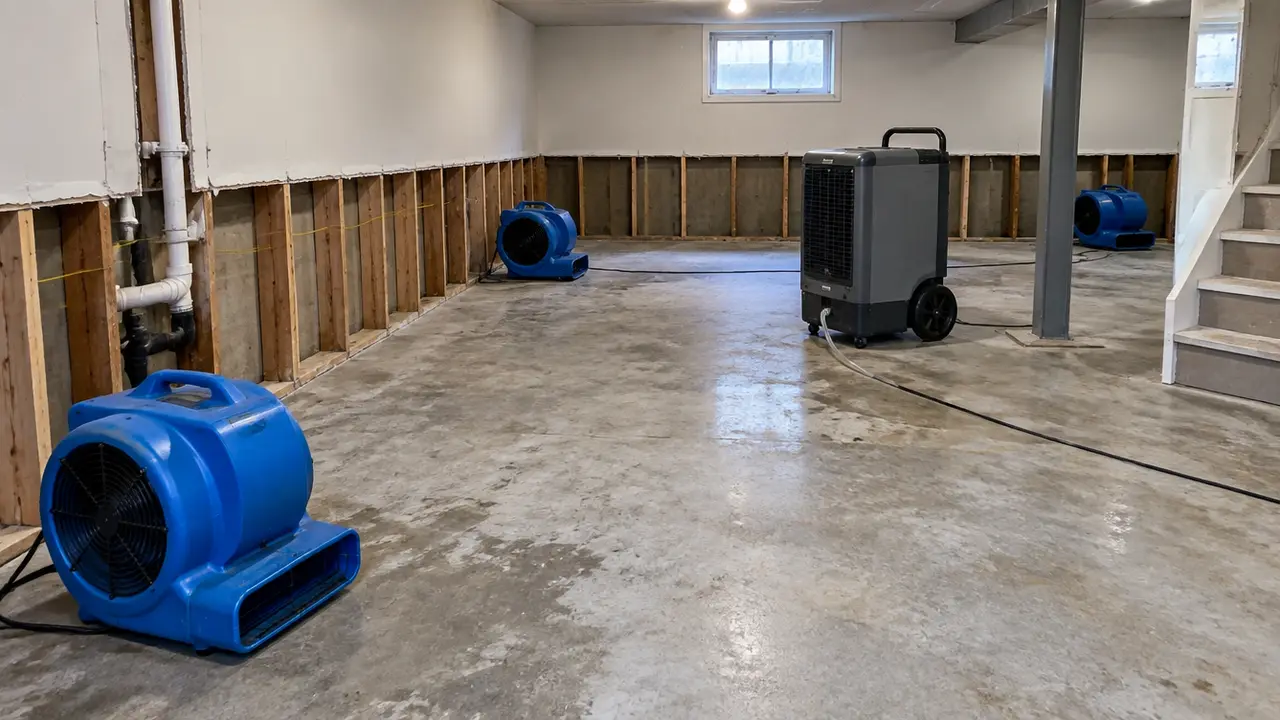
A restoration company handles the building side of a sewage loss once the drain is flowing: extraction, removal of contaminated materials, cleaning and disinfection, drying, and often the rebuild. It is a different trade from the drain or sewer contractor who clears the line, and the two are usually separate calls and separate invoices.
| Trade | Typical role | Hired by |
|---|---|---|
| Drain or sewer contractor | Clears the line, runs a camera, identifies the cause | Owner, or the municipality for its side |
| Restoration or mitigation company | Extraction, tear-out, disinfection, drying, documentation | Owner, often with insurer involvement |
| Contents specialist | Pack-out, cleaning or disposal of belongings | Owner or restorer, with insurer approval |
| General contractor | Rebuild of walls, floors and finishes | Owner, sometimes the same restorer |
| Electrician, gas technician | Safety checks before power and appliances return | Owner |
Industry practice commonly follows the ANSI/IICRC S500 standard, which describes procedures and precautions for professional water damage restoration. Asking whether a company works to it is reasonable; it does not replace checking the actual scope.
02 /Do you have to use the company your insurer suggests?
Not always, but talk to your insurer before deciding. Some insurers have preferred vendors and may process claims faster through them; others simply need to approve the scope and price. Your policy and your insurer's claims handler decide what applies to you.
- Ask on the first call whether the insurer wants to send a company, approve one you choose, or inspect first.
- If you choose your own, send the insurer the company's name and written scope before major work starts.
- Ask who will pay the company and when, and whether any deductible is collected by the contractor.
- Get the answer in writing, even as a short email confirming the call.
- If there is no sewer backup coverage, you choose freely and pay directly, so compare at least two written scopes where time allows.
Whichever company you use, the relationship is with you as the owner. The contract, the access to your home and the decisions about what is removed are yours to approve, even when your insurer is paying. If you are ever unsure whether a proposed step is covered, pause and ask the adjuster before it happens rather than after the invoice arrives.
The Insurance Bureau of Canada notes that policyholders must act to limit further damage after a loss. Starting extraction and drying promptly, with the insurer informed, satisfies that duty better than waiting for a perfect choice.
03 /What questions should you ask a restoration company?
Ask questions that force specifics. Vague answers about “full sanitization” or “complete restoration” are a sign to ask again.
- Do you carry liability insurance, and do you have workers' compensation coverage in this province? Can I see proof?
- What will you remove, and to what height will drywall be cut?
- Which cleaning and disinfecting products will you use, and where?
- How many dehumidifiers and air movers, for how many days, and what reading ends the drying?
- Will I receive photos and moisture logs for my insurer?
- What is excluded: line clearing, contents, mould, rebuild, permits, asbestos testing?
- Who will be my contact, and how often will I get updates?
- Do you do the rebuild as well, and is that a separate contract?
04 /What should the written scope and contract include?
The scope should describe the work well enough that another company could price the same job. The contract should say who pays, when, and what happens if the scope changes.
| Item | What to look for |
|---|---|
| Area | Rooms and square footage affected |
| Removal | Named materials and the drywall cut height |
| Cleaning and disinfection | Surfaces covered and product type |
| Drying | Equipment count, expected days, target readings |
| Containment | Plastic barriers if the rest of the house is lived in |
| Disposal | How contaminated waste will be removed |
| Documentation | Photos and moisture logs provided to you |
| Exclusions | Line clearing, contents, mould, rebuild, testing |
| Changes | How extra work is approved before it is done |
| Payment | Who pays, deductible handling, and any direction-to-pay form |
A direction-to-pay or assignment form lets your insurer pay the contractor directly. It can be convenient, but read it carefully: understand what you are authorizing, whether it covers only this scope, and what you owe if the insurer pays less than the invoice. Ask your insurer before signing.
05 /How do you supervise the job while it is under way?
Stay involved without getting in the way. A short daily check keeps the job honest and your records complete.
- Walk through on day one
Agree on what is being removed before it goes, and photograph it.
- Keep the equipment running
Do not switch off dehumidifiers or air movers to save noise or power unless the company agrees; drying stalls.
- Ask for the readings
Request the moisture log at each visit and compare it with the target.
- Keep your own notes
Dates, visits, what was done and any changes agreed.
- Flag surprises early
If you notice new staining, odour or dampness, raise it before walls are closed.
06 /When is a sewage cleanup job really finished?
The mitigation phase is finished when all contaminated porous materials are out, remaining surfaces are cleaned and disinfected, and moisture readings in affected materials match unaffected ones. Health Canada's guidance ties mould risk to drying within 48 hours, so ask how the drying timeline compared with that benchmark.
- Final moisture readings, in writing, for each affected area.
- Photos of the empty, cleaned space before any rebuild.
- A list of materials and contents removed.
- An invoice that matches the approved scope and any approved changes.
- No musty or sewage odour a day after equipment is removed.
For the residential scope in more detail, see residential sewage cleanup; for businesses, commercial sewage cleanup. If you would like help lining up a restoration company, you can send a request with photos; any company suggested is independent and quotes on its own terms.
FAQQuestions people ask
How quickly should a restoration company start after a sewage backup?
As soon as the line is clear and the space is safe, ideally within the first day, so drying can meet the 48-hour benchmark Health Canada links to lower mould risk.
Can I use one company for cleanup and another for the rebuild?
Usually yes. Mitigation and rebuild are separate phases. Confirm with your insurer, and make sure the second company receives the moisture records.
What is a direction to pay on a restoration contract?
A form authorizing your insurer to pay the contractor directly. Read it before signing and ask your insurer, because it can affect what you owe if the payment falls short.
Is it normal for a restoration company to want a deposit?
Some ask for one, especially when there is no insurance claim. Get the scope in writing first, pay by a traceable method, and make sure the contract says how the deposit is applied.
Should the restoration company clear my sewer line?
Usually not. Line clearing is done by a drain or sewer contractor. The restoration company works on the building after the line flows.
What proof should I get that drying is complete?
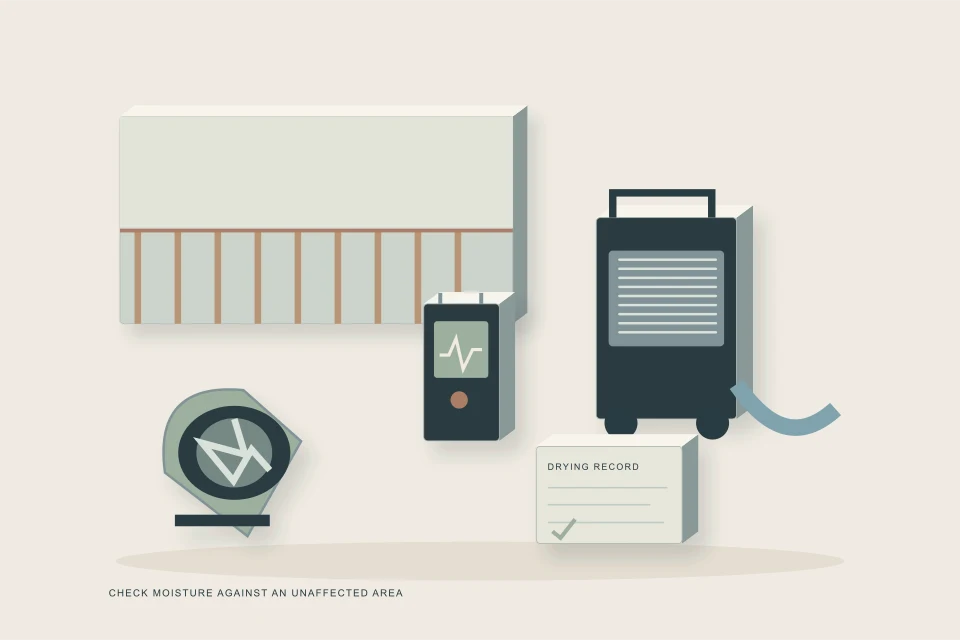
Written moisture readings for each affected area, compared with readings from unaffected areas of the same material, plus photos of the cleaned space.
NETWORKGo deeper across the HAUSE Sewer network
Sewer backup insurance: what your home policy does and does not pay
Sewer backup insurance in Canada: sewer backup vs overland water endorsements, exclusions, deductibles, and why pipe repair is rarely covered.
SewerCleaners.caHow to clean up after a sewer backup in the basement
How to clean a sewer backup in a basement: when to do it yourself, gear you need, removing soaked materials, cleaning, disinfecting, drying and rebuilding.
SewerRoots.caDoes home insurance cover tree roots in a sewer line?
Does home insurance cover tree roots in a sewer line in Canada? Why root cutting and pipe repair are usually excluded, and what backup endorsements pay.