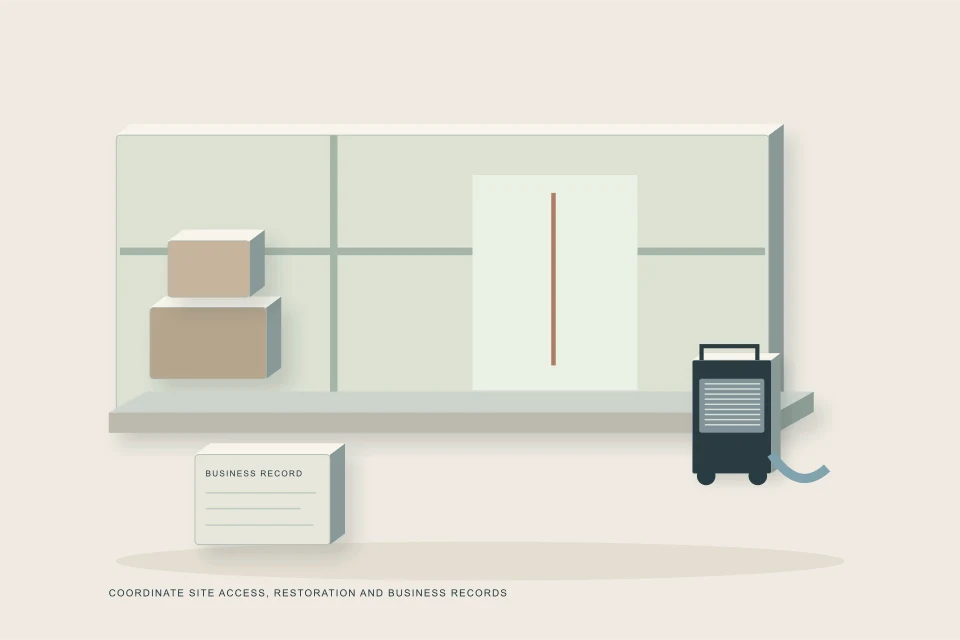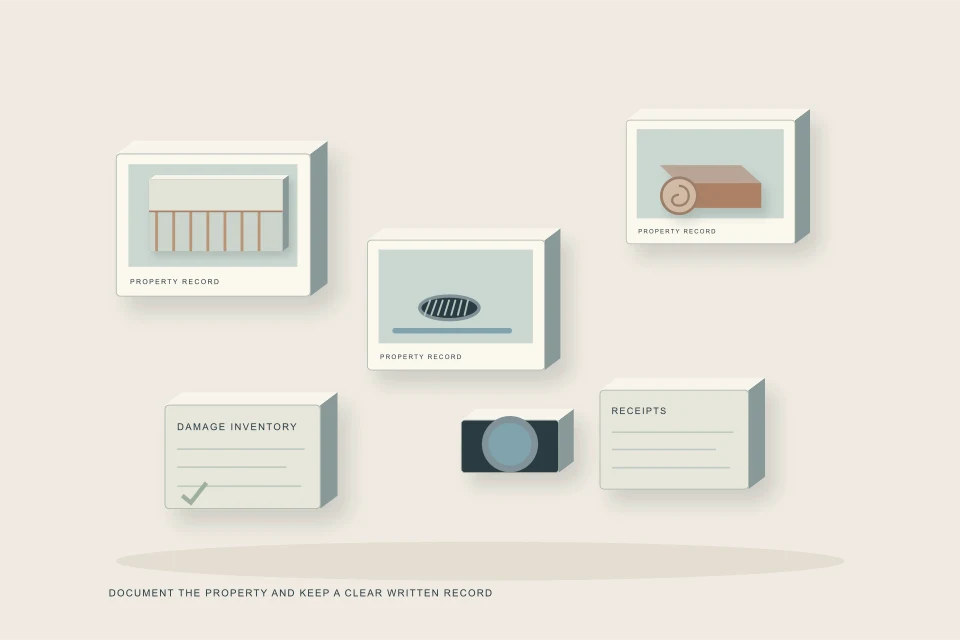
Document water and sewage damage before anything is cleaned or thrown away: wide and close photos of every room, the drain the water came from, and each damaged item. Then build an inventory with descriptions, ages and values, keep every cleanup receipt, record moisture readings, and log each call with the insurer. Report the loss quickly and act to limit further damage.
- Photos and video come first, before extraction or tear-out, because the evidence disappears with the cleanup.
- Sewage-soaked items are a health hazard, so photograph and list them, then ask your insurer before disposal.
- An itemized inventory with ages, quantities and values is what turns photos into a payment.
- Receipts for cleanup, equipment, temporary living costs and repairs belong in separate folders.
- Many policies expect a proof of loss form within a set period, often 30 days, so check yours early.
01 /What should you photograph after a sewage backup?
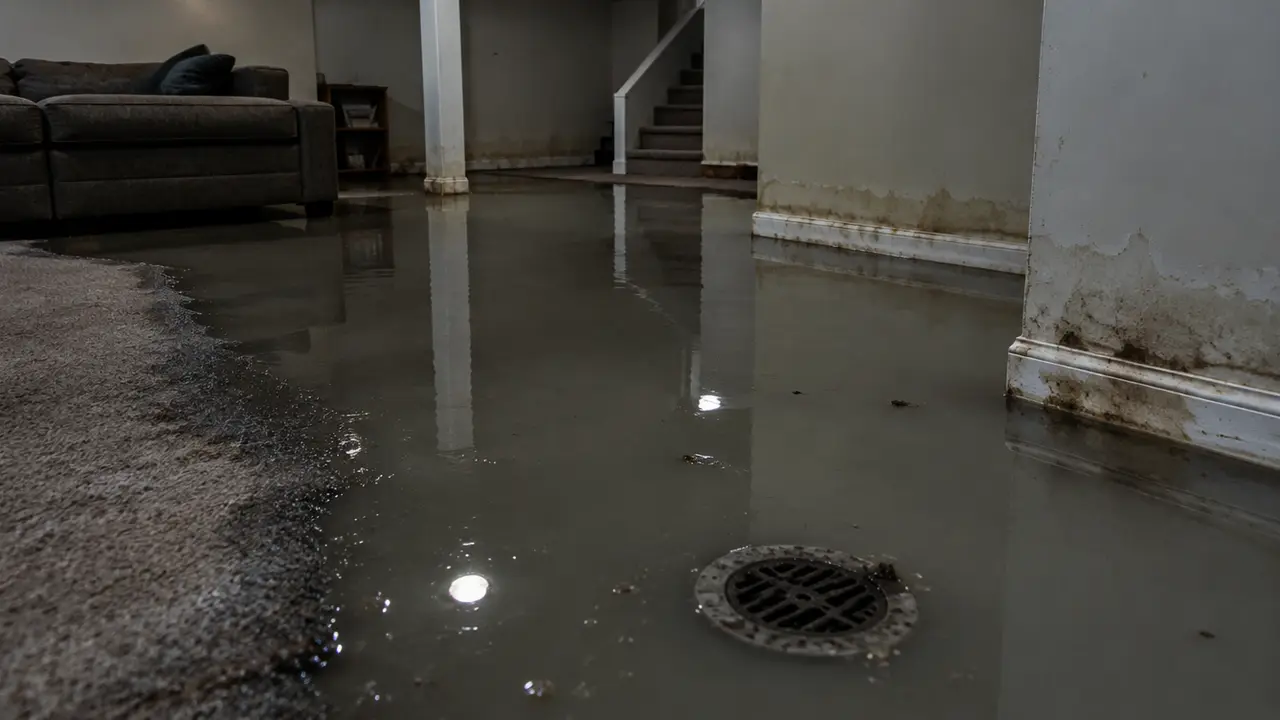
Photograph the source, the spread and the damage, in that order, before anything moves. An adjuster who never saw the basement flooded relies entirely on what you recorded in the first hour.
| Shot | What to capture | Why the adjuster needs it |
|---|---|---|
| Source | The floor drain, toilet or fixture where water came up, with water visible | Shows it was a backup, not seepage or a supply leak |
| Wide room views | Each room from the doorway, then each wall | Shows the extent and which rooms were affected |
| Water line | Close-ups of the tide mark on walls, furniture legs and boxes | Shows depth and therefore how high materials were affected |
| Damaged items | Each item with its label, brand plate or serial number | Supports value and replacement cost |
| Outside | Street flooding, neighbours' activity, rain gauge or weather | Supports a municipal-side or storm cause |
| Progress | After extraction, after tear-out, during drying | Shows what was removed and why |
Take more photos than feel necessary. Storage is free, and an adjuster reviewing the file weeks later cannot ask you to go back and take the shot you missed. Include a few photos with a tape measure against the wall to show water depth, and one of each room's ceiling if water came from above.
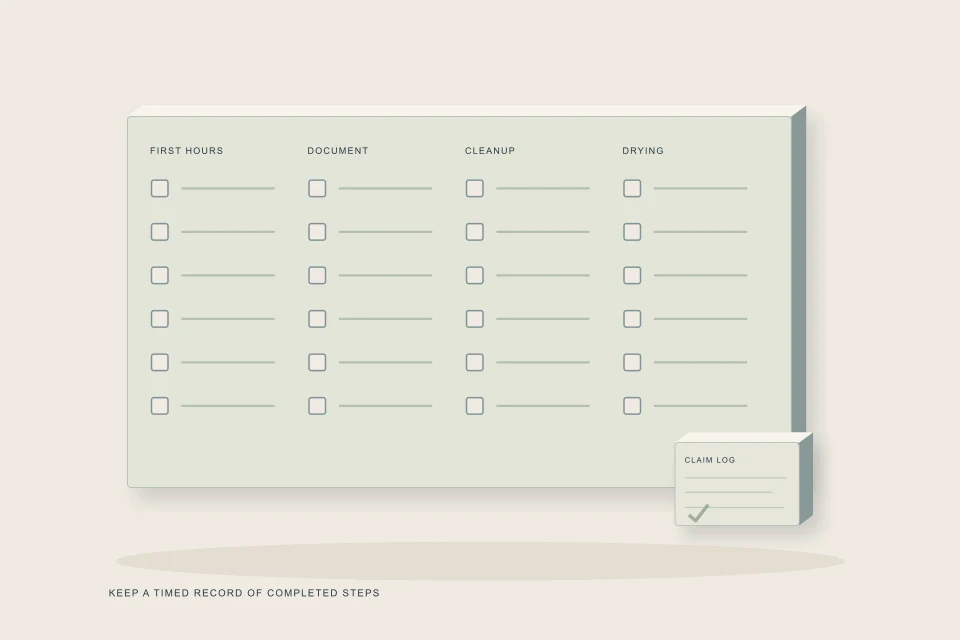
Add a slow video walkthrough, saying the date and time aloud. Keep the original files rather than edited copies, and back them up somewhere other than the phone that took them. The Sewage Backup Checklist adds a timestamped list of the steps you took.
02 /Can you throw out sewage-damaged items before the adjuster comes?
Ask first. The Insurance Bureau of Canada's claim advice is to keep damaged items until your insurer confirms they can be disposed of, unless they are hazardous. Sewage-soaked carpet, mattresses and food are a health hazard and usually cannot sit in a house for days, so the practical answer is to photograph and list them thoroughly, tell the insurer, and follow their instructions.
- Cut and keep a small sample of carpet and underlay in a sealed bag, labelled with the room, if your insurer wants one.
- Photograph brand labels on furniture and the manufacturer tags on mattresses before disposal.
- Note the quantity of bags or the size of the bin removed, and keep the disposal receipt.
- Keep hard items that can be cleaned, such as tools or metal shelving, until the adjuster has seen them.
- Never keep contaminated food or medicines; photograph and discard them.
What normally goes and what can be cleaned is in what to throw away after a sewage backup.
03 /How do you build a contents inventory an insurer can use?
Build the inventory as a spreadsheet with one row per item, grouped by room. The Insurance Bureau of Canada advises making a complete list of damaged or destroyed items and gathering proofs of purchase, receipts and owner's manuals. A list with enough detail to price each item saves weeks of back and forth.
| Column | Example | Tip |
|---|---|---|
| Room | Basement rec room | Match the room names in your photos |
| Item and description | Three-seat fabric sofa | Include brand and model where known |
| Quantity | 1 | Group identical items, such as 12 storage boxes of books |
| Age or purchase year | 2019 | An estimate is fine; say it is an estimate |
| Original price or replacement cost | From receipt or a current listing | Save a screenshot of the listing |
| Condition after loss | Sewage-soaked, discarded | Or cleaned, salvaged |
| Photo reference | IMG_1043 | Link each row to its photo |
Bank and card statements, online order histories and old photos of the room are good substitutes for missing receipts. Do the list room by room while memory is fresh, and have a second household member review it.
04 /Which receipts and records should you keep?
Keep every receipt connected to the loss, and file them by type. The Insurance Bureau of Canada specifically mentions keeping all receipts related to cleanup, and asking about additional living expenses if the home cannot be lived in.
- Drain or sewer contractor invoice, with any camera footage and written findings on the cause.
- Cleanup and drying invoices, with the itemized scope and moisture readings.
- Purchases you made yourself: protective gear, disinfectant, rental equipment, garbage bags.
- Disposal and bin rental receipts.
- Temporary accommodation, meals and extra travel if you had to leave the home.
- Rebuild quotes and invoices, kept separate from the mitigation phase.
- Any report or reference number from your municipality, such as a 311 service request.
Moisture logs deserve special mention. They prove when drying started and when materials reached normal levels, which matters if mould later becomes an issue. How drying is measured is in drying and mould after a sewage backup.
05 /What should you record about calls with your insurer?
Record every conversation: the date, the time, who you spoke to, and what was agreed. The Insurance Bureau of Canada advises reporting a loss as soon as possible and notes your policy requires you to act to limit further damage, so an early call and a written trail protect you on both counts.
- First call
Report the loss, get the claim number, and ask whether your policy includes sewer backup coverage and at what limit and deductible.
- Ask about contractors
Ask whether the insurer wants to approve or suggest the cleanup company, and whether it wants to inspect first.
- Ask about living expenses
If the home is unusable, ask what additional living expense coverage applies.
- Confirm in writing
Send a short email after each call summarizing what was said. It becomes the record.
- Proof of loss
Ask when the insurer needs the proof of loss form. IBC notes it is typically required within 30 days; your policy sets the actual deadline.
06 /What if you think the city caused the backup?
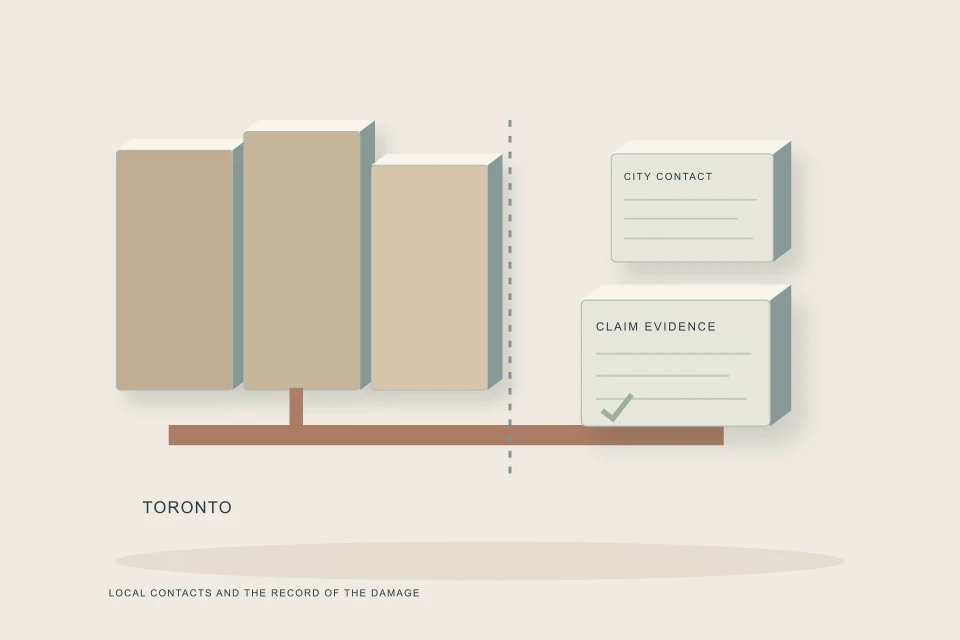
Report it to the city right away and keep the evidence that points to the public side. Some cities have a formal claims route; the City of Toronto, for example, says claims about flooding from City infrastructure failure are forwarded to and managed by its insurance adjusters.
Useful evidence includes neighbours affected at the same time, heavy rain recorded that day, a drain contractor's camera footage showing your line clear, and the city's own service request number. Keep your own insurer informed as well. City routing for Toronto, Vancouver, Montréal, Calgary and Edmonton is on the locations page, and the order of calls on the day is in the emergency guide. For help lining up cleanup, you can send a request with your photos.
FAQQuestions people ask
How soon should I report sewage damage to my insurer?
As soon as people are safe, ideally the same day. The Insurance Bureau of Canada advises reporting a loss as soon as possible, and delays can make the damage worse.
Is video better than photos for an insurance claim?
Use both. Video shows the whole space and the water level in context; photos give clear close-ups of labels, serial numbers and water lines.
Do I need receipts for everything I lost in the basement?
No, but they help. Card statements, order histories and photos of the items in use can support values when receipts are gone.
Should I sign the cleanup company's paperwork before talking to my insurer?
Read it carefully first. Some forms assign payment from your insurer to the contractor. Ask your insurer whether it approves the contractor and scope before you sign.
What is a proof of loss form?
It is the insurer's form listing the damaged property and its value. IBC notes it is typically due within 30 days, but your policy sets the deadline.
NETWORKGo deeper across the HAUSE Sewer network
Sewer backup: what to do in the first hour
What to do in the first hour of a sewer backup: electrical safety, stopping water use, calling a sewer cleaner, insurance photos, health and cleanup.
SewerRoots.caDoes home insurance cover tree roots in a sewer line?
Does home insurance cover tree roots in a sewer line in Canada? Why root cutting and pipe repair are usually excluded, and what backup endorsements pay.
SewerQuotes.comSewer backup insurance: what your home policy does and does not pay
Sewer backup insurance in Canada: sewer backup vs overland water endorsements, exclusions, deductibles, and why pipe repair is rarely covered.