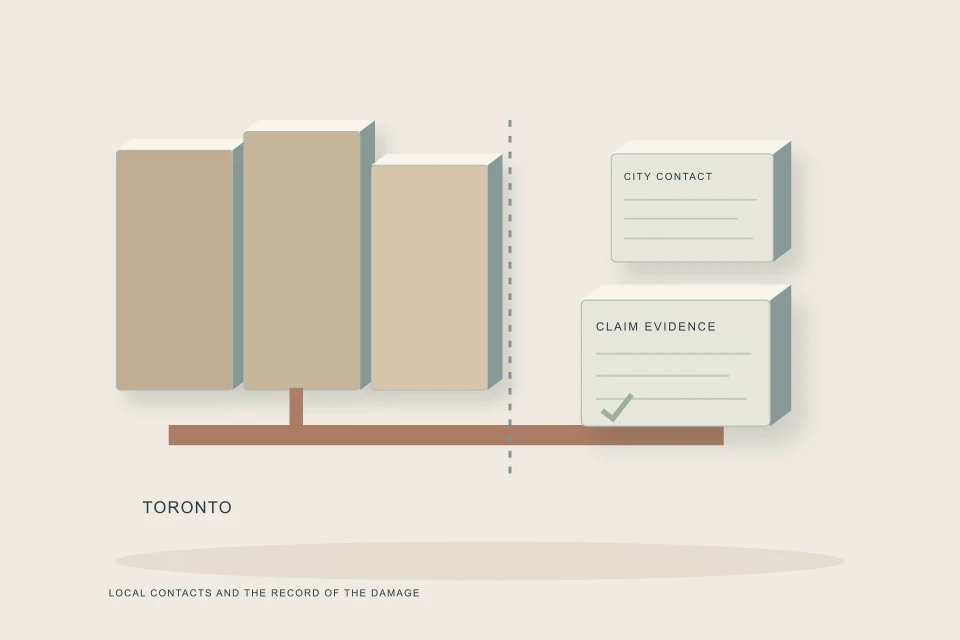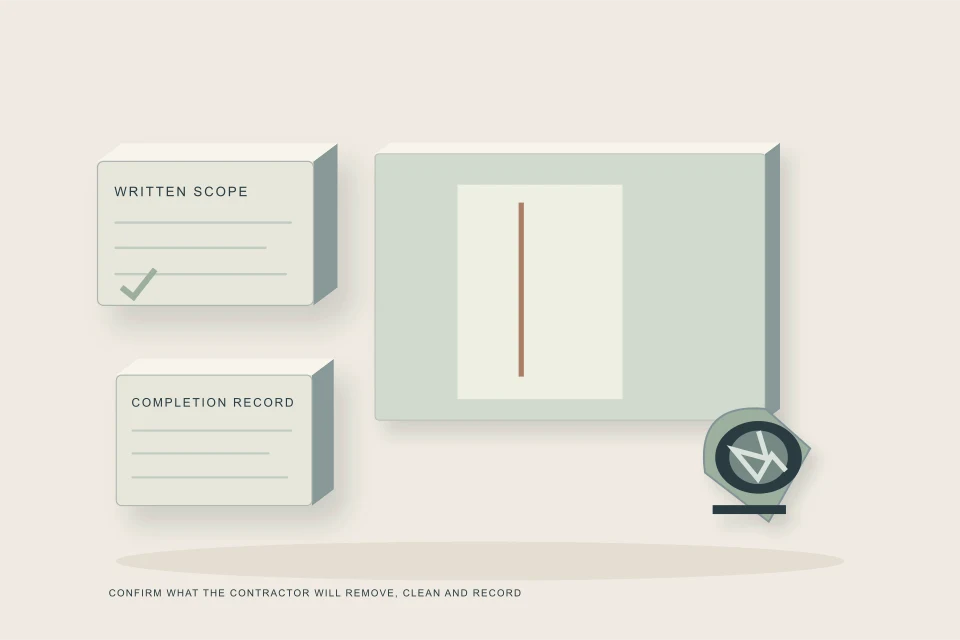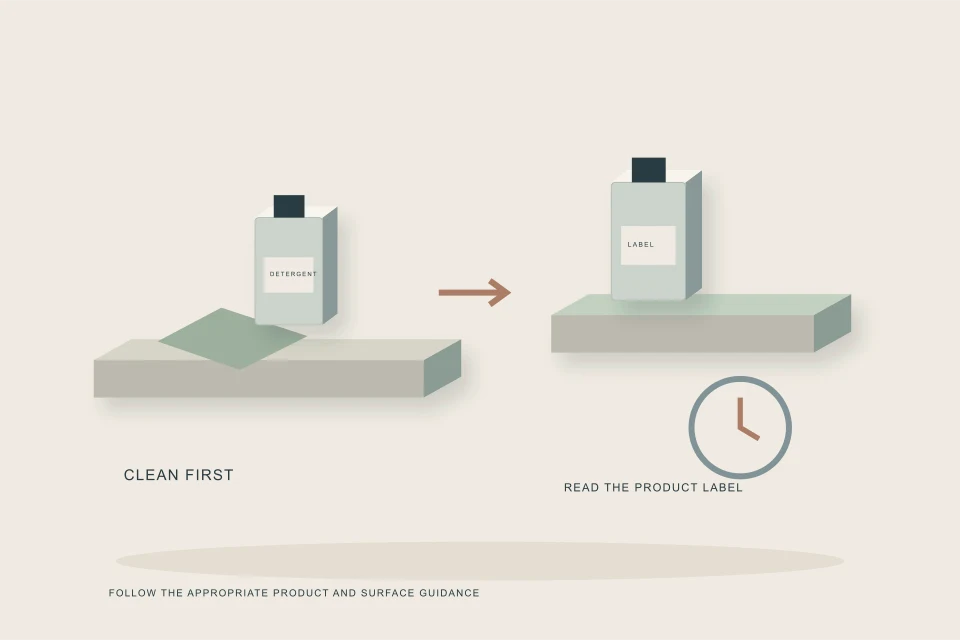
Disinfect after a sewage backup in two passes. First clean every hard surface with detergent and water to remove sludge and film, because disinfectants fail on dirt. Then apply a disinfectant following its label, leaving it wet for the stated contact time, and rinse where the label says. Remove porous materials first; disinfecting cannot make soaked carpet or drywall safe.
- Cleaning and disinfecting are two different steps, and cleaning always comes first.
- A disinfectant only works for the contact time on its label, so it must stay wet on the surface that long.
- Never mix bleach with ammonia, vinegar or other cleaners; toxic gases can form.
- Health Canada notes bleach is not needed for cleaning mould; detergent and water do that.
- Tools, boots and the wet/dry vacuum need the same clean-then-disinfect treatment before storage.
01 /What is the difference between cleaning and disinfecting?
Cleaning removes dirt, sludge and the film sewage leaves behind; disinfecting kills the germs that remain on a clean surface. You need both, in that order. A disinfectant sprayed onto a dirty floor spends itself on the organic matter and leaves germs protected underneath.
| Step | What it does | What you use |
|---|---|---|
| Remove bulk | Takes away liquid and solids | Wet/dry vacuum, squeegee, shovel, absorbent material |
| Clean | Lifts the remaining film and grime | Unscented detergent, water, stiff brushes |
| Rinse | Removes loosened dirt and detergent | Clean water, then extraction |
| Disinfect | Kills germs left on the clean surface | A disinfectant used exactly as labelled |
| Dry | Stops regrowth and prevents mould | Dehumidifiers and air movers |
Health Canada's flood guidance recommends unscented detergent for cleaning, and notes that sewage-contaminated areas need a more rigorous disinfection procedure. Do not skip straight to the disinfectant because it smells stronger.
02 /Which surfaces can be disinfected after sewage?
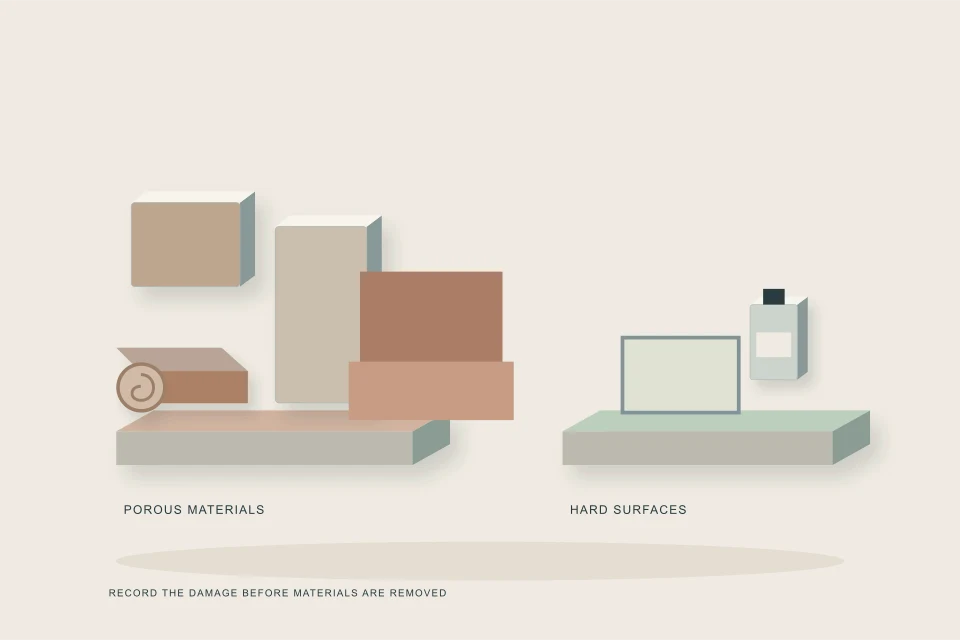
Only hard, non-porous or sealed surfaces can be reliably disinfected. Porous materials that sewage soaked into, such as carpet, underlay, drywall, insulation and particleboard, are removed rather than treated, because the disinfectant cannot reach the contamination inside them.
- Concrete floors and foundation walls, after scrubbing; concrete is porous at the surface, so give it extra detergent work and a full contact time.
- Wood framing and bottom plates that stay in place, once the drywall is off.
- Ceramic tile and grout, paying attention to the grout lines.
- Metal ducts, pipes, appliance exteriors, shelving and tools.
- Hard plastic storage bins and fixtures.
- The floor drain grate, the drain body and the area around any cleanout.
Which items go and which stay is decided before disinfection; see what to throw away after a sewage backup.
03 /How do you use bleach safely after a sewage backup?
Use household bleach diluted in water, on surfaces that have already been cleaned, in a ventilated space, and never mixed with anything else. The City of Toronto's basement flooding guidance gives one cup of household bleach to five gallons of water as a sanitizing solution. Follow the product label for its own dilution and contact time.
- Ventilate
Open windows if possible, and keep people and pets out of the area.
- Protect yourself
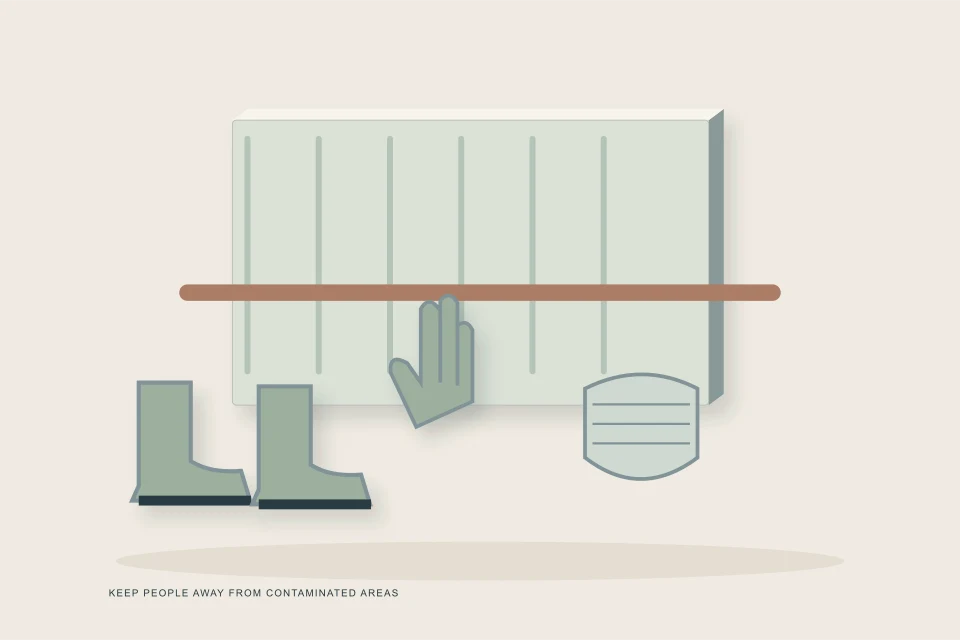
Waterproof gloves, goggles and old clothes; bleach splashes damage eyes and fabric.
- Mix fresh
Measure into cold water, not the other way round, and make only what you will use that day.
- Apply to clean surfaces
Use a sprayer, mop or cloth so the surface stays visibly wet for the label's contact time.
- Rinse where the label says
Especially on anything that will touch food or skin.
Health Canada's mould guidance makes a separate point worth knowing: there is no need to use bleach for cleaning mould, because detergent and water remove it. Bleach is a disinfectant for sewage contamination on hard surfaces, not a mould cure.
04 /What other disinfectants can be used?
A hard-surface disinfectant authorized by Health Canada, used according to its label, can be used after a sewage backup. Authorized products usually carry an eight-digit Drug Identification Number, printed after the letters DIN on the label; the label also states which germs the product is effective against and how long it must stay wet.
| Label item | Why it matters |
|---|---|
| DIN (Drug Identification Number) | Usually shows Health Canada has authorized it as a disinfectant |
| Surfaces | Some products damage metals, stone or finishes |
| Dilution | Too weak fails; too strong wastes product and can harm surfaces |
| Contact time | The surface must stay wet this long for the claim to hold |
| Rinse instructions | Food-contact and skin-contact surfaces often need rinsing |
| Protective equipment | Some products need gloves, goggles or ventilation |
Restoration contractors often use their own commercial products. Ask what they are applying, where, and why, and ask for the product name on the invoice. Scented deodorizers are not disinfectants and do not replace this step.
05 /How do you disinfect tools, boots and equipment?
Treat everything that touched sewage as contaminated until it has been cleaned and disinfected, including the tools you used for the cleanup. This is where contamination often spreads upstairs.
- Wet/dry vacuum: empty it outside or into the floor drain once the line is clear, then wash the tank, hose and filter housing with detergent, disinfect, and let it dry open. Replace the filter.
- Boots and gloves: scrub with detergent, disinfect, rinse and dry before taking them into the house. Throw away disposable gloves.
- Brushes, squeegees and mops: clean and disinfect, or discard cheap mop heads and sponges.
- Clothing: wash separately from the household laundry in hot water.
- Drying equipment: wipe down exteriors of dehumidifiers and fans before moving them to another room.
Wash your hands thoroughly with soap and water each time you leave the work area. Health risks and the protective gear to wear are covered in health risks of sewage exposure.
06 /In what order should a basement be cleaned and disinfected?
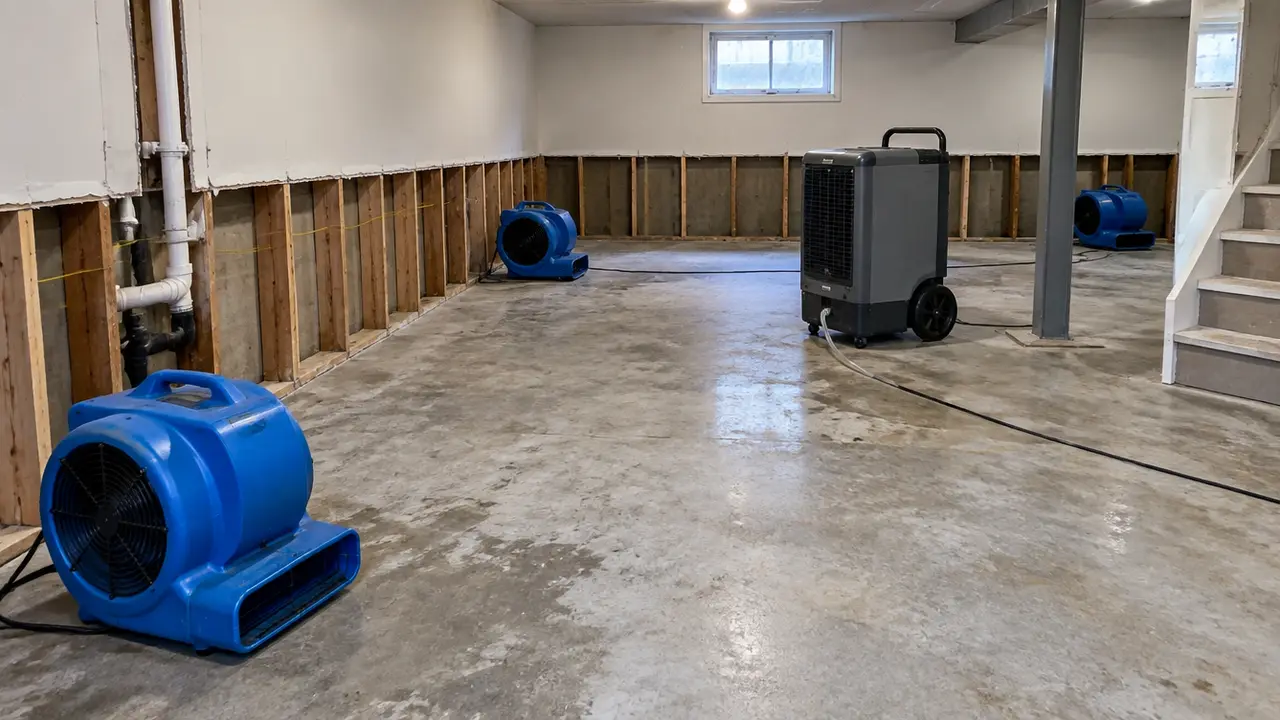
Work from the top down and from the far side of the room toward the exit, so you never walk back across a surface you have already disinfected. The order below suits a typical basement after the soaked materials have been removed.
- Walls and exposed framing, starting above the cut line and working down to the bottom plate.
- Fixed items at floor level: stair stringers, posts, the base of the furnace stand, shelving legs.
- The floor drain, cleanout area and any backwater valve cover.
- The floor itself, working toward the stairs.
- The stairs, last, as you leave.
- Tools, boots and equipment, outside or in a tub set aside for the purpose.
Change rinse water often; dirty rinse water redeposits what you just removed. Once everything is disinfected, the space moves straight into drying, and nobody should walk through in street shoes until it is dry.
07 /How do you know the disinfection worked?
For a home, the practical test is process, not a lab result: every porous item that sewage reached has been removed, every remaining hard surface has been cleaned and then disinfected for the full contact time, and everything has dried. A lingering sewage smell after drying usually means something was missed, such as a wet bottom plate, a cabinet base or a cavity under flooring.
On larger or commercial losses, some owners and insurers ask for independent testing before rebuild; ask your restorer or insurer whether that applies. Drying is the final step that makes the disinfection last, and it is covered in drying and mould after a sewage backup. If the job is bigger than a small hard-surface spill, read DIY versus professional cleanup or send a request for help.
FAQQuestions people ask
Do I need to disinfect after sewage, or is cleaning enough?
Both. Cleaning removes the grime; disinfecting kills germs left on the clean surface. Public guidance calls for more rigorous disinfection whenever sewage is involved.
What bleach ratio does Toronto suggest after a basement flood?
The City of Toronto's guidance gives one cup of household bleach to five gallons of water for sanitizing. Always follow your product's label as well.
Can I disinfect carpet after a sewage backup instead of replacing it?
No. Disinfectant cannot reach contamination deep in carpet and underlay. Sewage-soaked carpet and underlay are normally removed.
How long should disinfectant stay on the surface?
For the contact time printed on its label. The surface must stay visibly wet that long for the product to work as claimed.
Is vinegar a good disinfectant after a sewage backup?
Vinegar is not an authorized disinfectant for sewage contamination and must never be mixed with bleach. Use an authorized disinfectant, usually one showing a DIN, exactly as labelled.
NETWORKGo deeper across the HAUSE Sewer network
How to clean, dry and store a drain auger so it lasts
How to clean a drain auger or toilet auger after use: rinsing, disinfecting, drying and oiling the cable, checking for kinks, and knowing when a snake is done.
SewerCleaners.caHow to clean up after a sewer backup in the basement
How to clean a sewer backup in a basement: when to do it yourself, gear you need, removing soaked materials, cleaning, disinfecting, drying and rebuilding.
PipeCleaning.caBleach, hydrogen peroxide, acetone and acid in drain pipes
Can bleach, hydrogen peroxide, acetone or acid clean drain pipes? What each does, which mixtures release toxic gas, and what to use on sink and toilet pipes.