In Toronto, report a basement flood or sewage backup to 311 so City staff can investigate and try to find the source. Stop using water, and contact Toronto Hydro if water has reached outlets. The City looks after sanitary sewers under the road; a blocked private drain on your property is your responsibility. The City recommends professional cleaners for sewage.
- Call 311 first for a basement flood in Toronto; City staff investigate and try to determine the source.
- The City's sanitary sewers under the road are its responsibility; a blocked private drain, leaking walls or poor lot drainage are the owner's.
- If City infrastructure failed, you can file a claim with the City, which its insurance adjusters manage.
- Toronto advises hiring professional cleaners for sewage and wearing full protective clothing for any cleanup.
- The Basement Flooding Protection Subsidy Program was active as checked September 2026, with a lifetime maximum of $6,650 per property.
01 /Who do you call first for a sewage backup in Toronto?
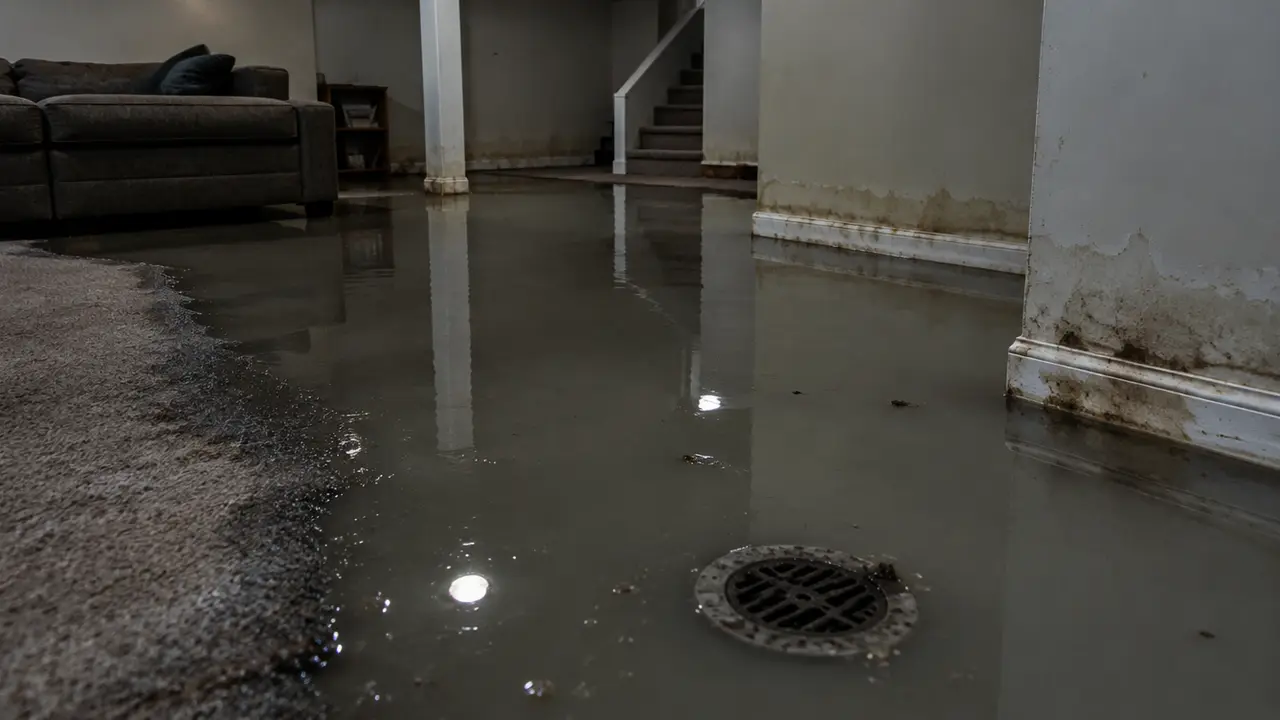
Call 311 first. The City of Toronto's basement flooding page asks residents to report flooding through 311, by phone or online, and says City staff will investigate, assess the flooding and attempt to determine the source. That report also creates a record you may need later if you believe the City's system caused the backup.
- Make the electrical situation safe
Toronto's guidance is to contact Toronto Hydro to shut off the power if water has risen above outlets. Do not wade in to reach the panel.
- Stop using water
The City warns that when a sewer backup is suspected, water sent down any drain may end up in your basement. No toilets, sinks, showers or laundry.
- Call 311
Describe what came up, from which drain, and whether it was raining or neighbours are affected.
- Call your insurer or broker
Record the claim number and ask whether they want to approve a cleanup company.
- Book a drain contractor if the problem is on your side
If the City finds its sewer flowing, your private drain is the likely blockage and needs clearing before cleanup.
HAUSE is an information and request network, not a Toronto restoration crew. If you would like help lining up cleanup quotes, you can send a request with photos; for the steps that apply in any city, see the sewage emergency guide.
02 /Which part of the sewer does Toronto own, and which part do you?
Toronto draws the line between the public sanitary sewer under the road and the private plumbing and drains on your lot. The City says that if flooding results from a private blocked drainpipe, leaking foundation walls or poor lot drainage on your property, you are responsible for repairs.
| Part of the system | Who is responsible | What that means for cleanup |
|---|---|---|
| City sanitary sewer under the road | City of Toronto | If it failed, a claim against the City may be possible |
| Your private drain and plumbing on the lot | Property owner | Clearing and repair are on you; cleanup falls to you or your insurer |
| Foundation walls and lot grading | Property owner | Seepage is not a sewer claim and is often covered differently by insurers |
| Inside the house: finishes and contents | Property owner, subject to insurance | Sewer backup cover is optional in most Canadian policies |
The exact point where City responsibility begins on your service connection is a question for 311. Do not assume, and do not let a contractor dig on the City side without confirming.
03 /Can you claim against the City of Toronto for sewage damage?
You can file a claim if you believe the flooding resulted from a failure of City infrastructure. Toronto's page says such claims are forwarded to and managed by the City's insurance adjusters. Filing a claim is not a promise of payment; the adjusters investigate whether the City was responsible.
- Report to 311 promptly, so there is a record of the flood and the City's investigation.
- Keep photos of the water, the drain it came from, and the street if it was flooded.
- Keep invoices from the drain contractor, including any camera footage showing where the blockage was.
- Claim through your own insurer too, if you have sewer backup coverage; the two processes can run in parallel.
- Ask your broker how a City claim interacts with your own policy's deductible.
Evidence is what decides both kinds of claim. The documentation guide covers what to photograph, what to keep and how to list damaged contents.
04 /How does Toronto say to clean up after a sewage backup?
Toronto recommends hiring professional cleaners when sewage is involved. For any basement flood cleanup, its page lists full-length clothing, gloves, protective eyeglasses, rubber boots and a mask, and gives a household bleach solution of one cup of bleach to five gallons of water for sanitizing.
Two points from federal guidance sit alongside that advice. Health Canada says materials dried within 48 hours are less likely to grow mould, and that children, pregnant women and people with respiratory problems should never handle sewage-contaminated water or materials. Health Canada also notes that bleach is not needed for cleaning mould itself; detergent and water do that job. Bleach is a disinfectant for hard, cleaned surfaces, and must never be mixed with ammonia or other cleaners.
| Material | Typical outcome | Note |
|---|---|---|
| Poured concrete floor and walls | Cleaned and disinfected | Dry thoroughly before any new finish |
| Carpet and underlay | Discarded | Photograph and keep a sample if your insurer asks |
| Drywall and batt insulation | Cut out above the wet band | CMHC suggests at least 30 cm above the flood line |
| Upholstered furniture and mattresses | Usually discarded | Professional contents cleaning is sometimes possible for high-value pieces |
| Hard plastic, metal and glass items | Cleaned and disinfected | Wash, rinse, disinfect, dry |
Full lists are in what to throw away after a sewage backup, and the cleaning method is in disinfecting after a sewage backup.
05 /What does Toronto's Basement Flooding Protection Subsidy cover?
Toronto's Basement Flooding Protection Subsidy Program pays part of the cost of specific flood-protection work. As checked September 2026 on the City's program page, the program was active, and for work completed on or after November 12, 2025 it offered up to 80 per cent of invoiced costs to the maximums below.
| Measure | Subsidy (up to 80% of invoice) | Notes |
|---|---|---|
| Home plumbing assessment | Up to $500 | One assessment |
| Backwater valve | Up to $1,600 per device | Maximum two devices; building permit required |
| Sump pump | Up to $2,250 | Additional $300 available for a battery backup |
| Pipe severance and capping | Up to $400 | Typically the foundation drain connection; confirm scope with the City |
| Lifetime maximum per property | $6,650 | First come, first served |
The subsidy does not pay for cleanup. It pays toward measures that make the next cleanup less likely. How a backwater valve fits into recovery, and what to check on an existing one, is in backwater valves after a sewage backup.
06 /What about Mississauga, Vaughan, Markham and Richmond Hill?
The old version of this page listed suburbs around Toronto as if they were one service area. They are separate municipalities with their own sewer departments, their own phone lines and their own subsidy programs, and Toronto's program does not apply there. If you live outside the City of Toronto, start with your own municipality's website or service line.
The cleanup principles do not change at a municipal boundary: stop the water, record the damage, clear the line, remove what sewage ruined, disinfect and dry within about two days. For planning numbers, see the sewage cleanup cost guide, and compare other cities on the locations page.
FAQQuestions people ask
Does Toronto 311 send someone for a flooded basement?
The City says staff will investigate, assess the flooding and attempt to determine the source after a 311 report. Timing depends on demand, especially during citywide storms.
Who pays to clean a Toronto basement after a sewer backup?
Usually the owner, through sewer backup coverage if the policy has it. If City infrastructure failed, a claim can be filed with the City, which its adjusters assess.
Is Toronto's flooding subsidy available for cleanup costs?
No. It pays toward an assessment, backwater valves, sump pumps and pipe severance, not toward cleaning or restoring the basement.
Do I need a permit for a backwater valve in Toronto?
The City's subsidy page says a building permit is required for backwater valves. Confirm the current permit process with the City before work starts.
Should I call Toronto Hydro during a basement flood?
Yes, if water has risen above outlets or is near electrical equipment. The City's guidance is to have the power shut off to prevent shock.
NETWORKGo deeper across the HAUSE Sewer network
Sewer Backup Checklist
Sewer Backup Checklist: 24 steps in six stages, from making it safe to after cleanup, with a progress meter and a copy-ready summary for your insurer.
SewerQuotes.comBackwater valve installation cost and municipal subsidies
Backwater valve installation cost in Canada for 2026: CAD ranges for unfinished and finished basements, line items, subsidy program patterns and insurance angles.
SewerRoots.caWhose tree, whose pipe: who pays when roots block a sewer line
Who is responsible when a city or neighbour's tree sends roots into your sewer line: the general Canadian pattern, the evidence, and how to raise it.