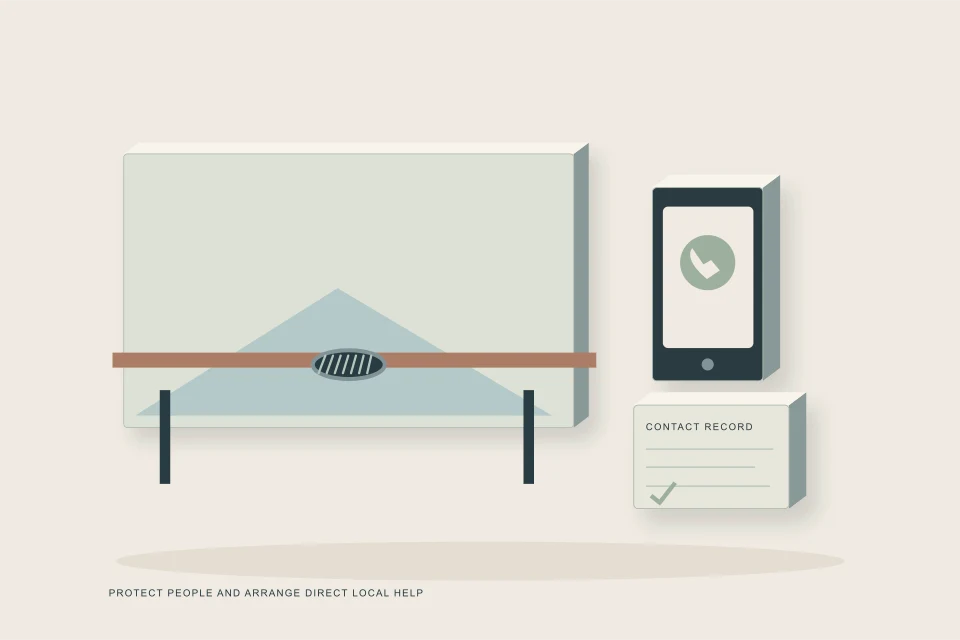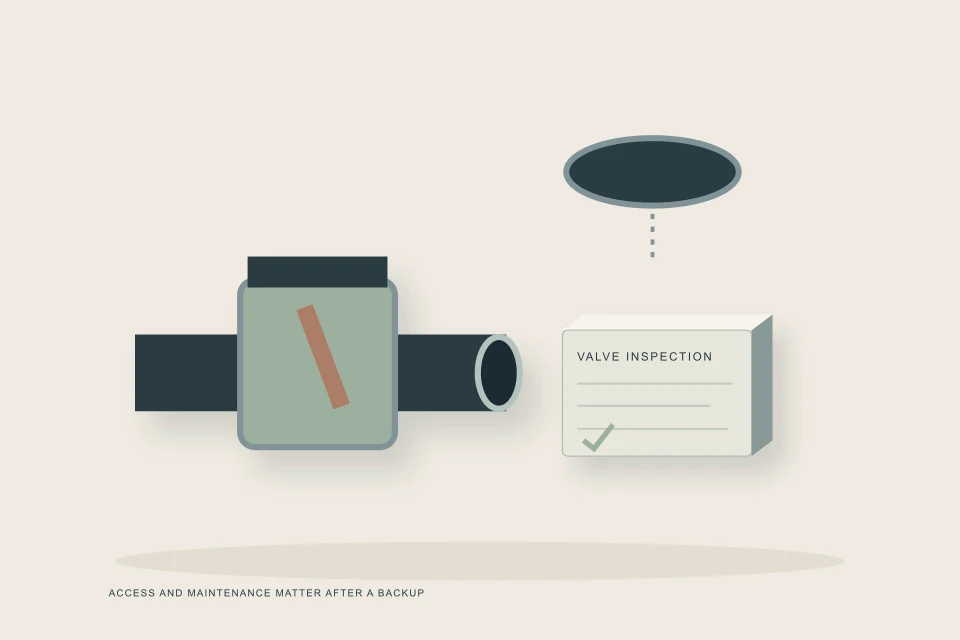
After a sewage backup, a backwater valve needs attention whether or not you have one. An existing valve should be opened, cleaned and checked, because debris from the flood can stop its flap closing. If the backup came from the city sewer and you have no valve, installing one is the main defence. A valve cannot prevent backups caused by a blockage in your own line.
- A backwater valve stops sewage flowing back from the municipal sewer; it does not stop a blockage in your own pipe.
- After any backup, have an existing valve opened, cleaned and checked, because debris can hold the flap open.
- When the valve is closed, water used in the house has nowhere to go, so stop water use.
- Toronto, EPCOR in Edmonton and Montréal's RénoPlex offered prevention aid as checked September 2026; Quebec's Rénoclimat adds aid from October 1, 2026.
- Keep the valve's access cover reachable when you rebuild the basement.
01 /Why did the basement flood if there was a backwater valve?
A basement can flood with a backwater valve in place for three common reasons: the blockage was in your own line, the valve was jammed open by debris, or water was used in the house while the valve was closed. Knowing which one happened decides the fix, and your insurer may ask.
| Cause | How it looks | What to do |
|---|---|---|
| Blockage in your own line | Sewage came up with no storm, neighbours unaffected, valve may be closed or open | Clear the line and camera it; the valve cannot help with this |
| Valve held open by debris | Backup during heavy rain, valve found with material on the seat or flap | Clean and inspect; consider more frequent checks |
| Water used while the valve was closed | Backup during a storm while laundry, showers or toilets were running | Stop water use when the valve closes; EPCOR gives the same warning |
| No valve on the fixture that flooded | Water came up through a fixture or drain not protected by the valve | Have a plumber check what the valve actually protects |
| Valve damaged or worn | Flap cracked, hinge broken, seal missing | Repair or replace the valve |
Montréal's article on backwater valves lists the same failure patterns from the other side: valves installed incorrectly, worn out, damaged by rodents, or made inaccessible. The City recommends checking, ideally twice a year, that each valve works and is not obstructed.
02 /What should you check on a backwater valve after the cleanup?
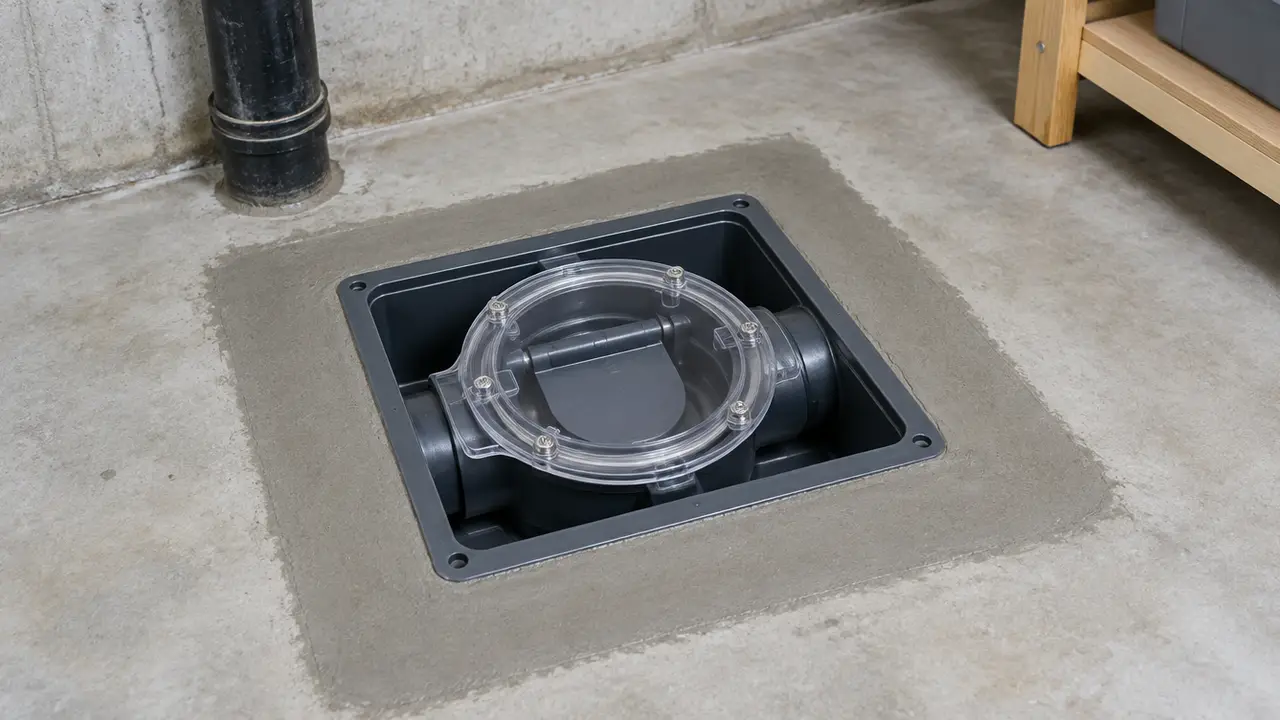
Once the line is clear and the sewage is cleaned up, open the valve's access cover and check that the flap is clean, moves freely and seals. A flood can leave paper, wipes, grease or grit on the seat that stops it closing next time.
- Wait until the line is clear and no water is being used
Never open a valve while water is standing above it or the sewer is surcharged.
- Wear the same protection as for the cleanup
Gloves, eye protection and a mask; the valve body will hold sewage residue.
- Open the access cover and inspect
Look for debris on the flap and seat, a damaged float, a missing seal or a cracked body.
- Clean and flush
Remove debris, rinse, and confirm the flap moves and seats. Clean and disinfect tools afterward.
- Replace the cover properly
A loose or cracked cover can leak sewage or sewer gas into the basement.
- Record it
Photograph the valve and note the date; insurers and future buyers may ask.
Many owners prefer to have a plumber or drain contractor do this, especially after a sewage backup. Routine valve maintenance is covered by the sister site SewerCleaners.ca.
03 /Should you install a backwater valve after a sewage backup?
If the backup came from the municipal sewer, usually during heavy rain or snowmelt, a backwater valve is the main protection against a repeat. The City of Calgary recommends a backwater valve on below-grade fixtures to help avoid costly sewage damage, the Insurance Bureau of Canada suggests installing one as recommended by your municipality, and Montréal's bylaw 11-010 makes them mandatory there.
- Confirm the cause first: a camera inspection shows whether your own line was blocked. A valve does not fix roots, grease or a broken pipe.
- Ask what the valve will protect: a mainline valve protects the whole building drain; a fixture-level valve protects one drain.
- Plan for access: the valve needs a cover you can reach, so do not bury it under new flooring during the rebuild.
- Check permits: in many cities, installing a backwater valve needs a plumbing permit and inspection.
- Ask your insurer whether a valve affects your coverage or premium; the Insurance Bureau of Canada notes some insurers offer incentives.
The rebuild after a sewage cleanup is often the cheapest time to install a valve, because the floor near the drain may already be open.
04 /What backwater valve subsidies exist?
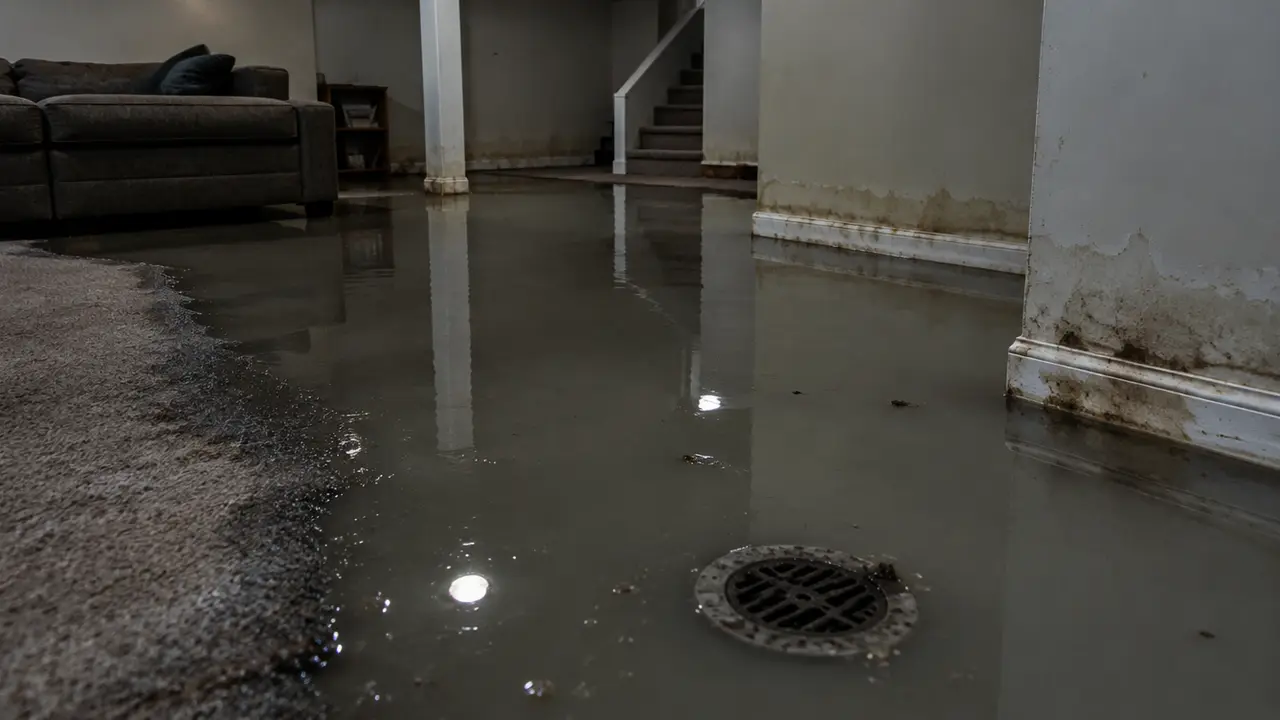
Several of the cities covered on this site offered prevention aid as checked September 2026. None pays for cleanup; they help pay for the valve or related work.
| Where | Program | Headline terms |
|---|---|---|
| Toronto | Basement Flooding Protection Subsidy Program | Up to 80% of cost, maximum $1,600 per backwater valve (two devices), permit required; see the Toronto guide |
| Edmonton | EPCOR Backwater Valve Subsidy | Up to $800, first come first served; single-family or duplex without an existing valve; see the Edmonton guide |
| Montréal | RénoPlex (City) | Flood-protection block for buildings of 1 to 5 units; value and minimum-cost rules apply; see the Montréal guide |
| Quebec | Rénoclimat adaptation component | From October 1, 2026, $700 to $1,000 for simple work such as a backwater valve |
| Calgary and Vancouver | None found on the city website | Ask 311 or 3-1-1 before assuming there is none |
05 /How does a backwater valve change the way you use water in a storm?
When a backwater valve closes, it blocks sewage coming in, but it also blocks wastewater going out. Anything you flush, drain or pump while it is closed backs up inside your own basement instead. EPCOR's advice is not to use the toilet, sink, shower, washer or dishwasher while the valve is closed, and to avoid using water during storms.
- During heavy rain or rapid snowmelt, put off laundry, dishwasher cycles and long showers.
- If you hear the valve close or see water rising at the floor drain, stop all water use.
- Make sure everyone in the house, including tenants in a basement suite, knows the rule.
- Keep the area above the valve clear so it can be checked after the storm.
This habit prevents the most frustrating kind of cleanup: a basement flooded by the household's own water while the valve was doing its job.
06 /How does a valve fit into the cleanup and claim record?
Record the valve's condition as part of your claim evidence: whether you had one, whether it was closed or open when you found it, and what the plumber found when it was opened. Some insurers ask about backwater valves when setting sewer backup coverage, so the record matters beyond this claim.
Photograph the valve before and after cleaning, keep the plumber's note, and add it to the file described in documenting water damage for insurance. If you are still deciding whether the cleanup needs a professional, use the Sewage Cleanup Triage. Warning signs that point to a restricted line, which a valve cannot fix, are in warning signs of a sewage backup. You can also send a request for help.
FAQQuestions people ask
Does a backwater valve stop all sewage backups?
No. It stops sewage flowing back from the municipal sewer. A blockage in your own line, or water used in the house while the valve is closed, can still flood the basement.
Should a backwater valve be cleaned after a sewage backup?
Yes. Debris carried by the backup can lodge on the flap or seat and stop it closing. Have it opened, cleaned and checked once the line is clear.
Can I use water when my backwater valve is closed?
No. With the valve closed, water from the house has nowhere to go and will come up at the lowest drain. Stop water use until it reopens.
Is a backwater valve mandatory in Canada?
It depends on the municipality. Montréal's bylaw 11-010 requires them; elsewhere they may be required for new construction or recommended. Check with your city.
Can a backwater valve help with my sewer backup insurance?
Possibly. The Insurance Bureau of Canada says some insurers reward valve or sump pump installation with incentives, and some ask about valves when setting coverage. Your broker can tell you what yours does.
NETWORKGo deeper across the HAUSE Sewer network
Backwater valves: how they work and how to maintain one
How a backwater valve works, normally open vs normally closed types, a step-by-step maintenance routine, and what to do when it closes in a storm.
SewerQuotes.comBackwater valve installation cost and municipal subsidies
Backwater valve installation cost in Canada for 2026: CAD ranges for unfinished and finished basements, line items, subsidy program patterns and insurance angles.
SewerInspector.caInspecting the sewer after a backup: finding out why it happened
Why a sewer camera inspection after a backup matters: private vs municipal causes, timing, what to record for insurance, and how to stop it happening again.