The main warning signs of a sewage backup are gurgling toilets or drains, several fixtures draining slowly at once, water appearing at the basement floor drain when something upstairs is used, a sewer smell indoors, and drains that struggle during heavy rain. Any of them means the line is restricted. Acting early keeps a future cleanup small or prevents it entirely.
- One slow sink is a fixture problem; several slow fixtures at once point to the main line.
- Water at the floor drain when a toilet or washer upstairs is used is the last warning before a backup.
- Drains that slow or gurgle during storms suggest the municipal sewer is surcharging.
- Keeping belongings off the basement floor turns a future backup into a smaller cleanup.
- Warning signs are a reason to book a drain contractor now, not to wait for the next storm.
01 /What are the warning signs that sewage is about to back up?
The warning signs are the ones that show water struggling to leave the building. Each one on its own can have an innocent cause; two or more together, or any one that keeps coming back, means the drain line needs attention before it overflows.
| Sign | What it usually means | Urgency |
|---|---|---|
| Gurgling toilets or drains, especially when another fixture empties | Air is being pushed back through water seals because flow is restricted downstream | Book a drain contractor this week |
| Several fixtures draining slowly at the same time | The restriction is in the shared building drain or lateral, not in one fixture | Book this week; reduce water use |
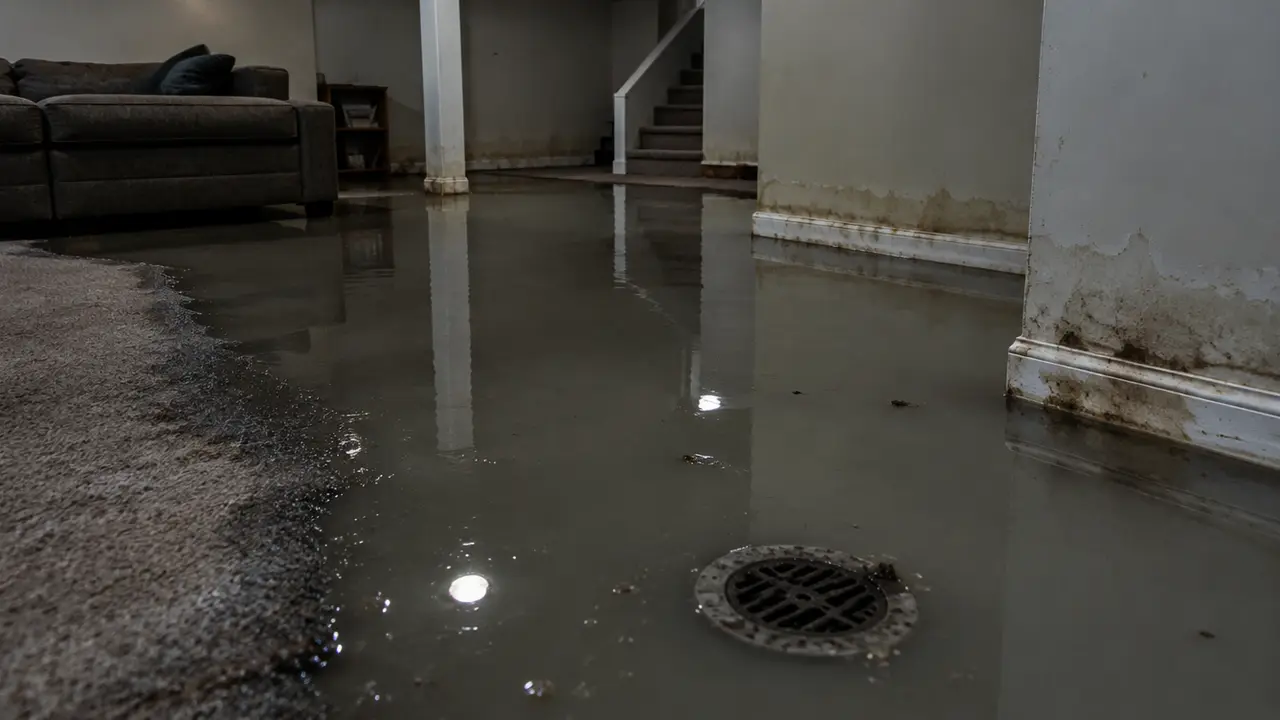
| Water or sludge at the basement floor drain when a toilet, tub or washer upstairs is used | The line is close to fully blocked; the floor drain is the lowest outlet | Stop water use and call today |
| Sewer odour indoors that does not clear | A dry trap, a vent problem, or sewage sitting in a partly blocked line | Investigate within days |
| Drains slowing or gurgling during heavy rain or snowmelt | The municipal sewer may be surcharging and pushing back up the service line | Avoid water use in storms; review backwater protection |
The City of Vancouver lists basement fixtures that drain slowly or make bubbling sounds among the problems that can go either to 3-1-1 or to a plumber. That is a useful reminder that the cause can sit on either side of the property line.
02 /Why does gurgling come before a backup?
Gurgling happens because a drain system is a balance of water and air. Every fixture has a trap that holds a small seal of water, and vents let air in and out so water can flow smoothly. When the pipe downstream narrows, water leaving one fixture pushes or pulls air through the traps of others, and you hear it as a gurgle or see the toilet bowl level rock.
Gurgling can also come from a blocked vent, which is not a backup risk in itself. The difference is that a vent problem usually affects one fixture group, while a building drain problem shows up across the house and gets worse when a lot of water is used at once, such as a washing machine draining.
03 /What should you do when you notice a warning sign?
Reduce water use, check whether the problem is one fixture or several, and book the line cleared before it fails. The cost of a planned drain visit is a fraction of any sewage cleanup.
- Run a simple test
Fill and drain an upstairs tub or run a washer cycle while someone watches the basement floor drain. Water rising there means the main line is restricted.
- Cut back on water use
Spread out laundry and showers until the line is cleared. Avoid running several large drains at once.
- Book a drain contractor
Ask for clearing to the city connection and a camera inspection so the cause is known, not guessed.
- Check your backwater valve
If you have one, make sure the access cover is reachable and the valve is clean. A stuck-open valve gives no protection.
- Do not use chemical openers on a main-line problem
They rarely reach a main-line blockage and make the eventual clearing and cleanup more hazardous.
Clearing the line is the specialty of the sister site SewerCleaners.ca. If the warning turns into water on the floor, switch to the sewage emergency guide.
04 /How can you make a future sewage cleanup smaller?
You can shrink a future cleanup by deciding now what would get wet. The biggest cleanup bills come from carpet, drywall, stored cardboard and soft furniture, all of which are discarded after sewage. Moving or protecting them costs little and changes the size of the job.
- Store belongings in lidded plastic bins on shelves, not in cardboard boxes on the floor.
- Keep the area around the floor drain clear so water can be seen early and reached safely.
- Choose water-tolerant finishes near the drain, such as sealed concrete or tile, rather than carpet.
- Raise appliances like freezers and dehumidifiers off the floor where practical.
- Keep important documents and photos out of the basement entirely.
- Know where your main water valve, electrical panel and backwater valve are, before you need them.
What sewage ruins, and what survives a proper cleaning, is set out in what to throw away after a sewage backup. Looking at that list before a backup is the best way to decide what to store differently.
05 /What causes the line to give these warnings?
Most warnings come from something narrowing the line over time. The City of Vancouver names personal products, paper towels, cat litter, baby wipes, tree roots, grease, misaligned joints, and a broken lateral or plugged main as the most common causes of sewer backups. The City of Calgary, which says it responds to over 8,000 sewer backups a year, reduces the prevention message to one line: only pee, poo and toilet paper belong in the toilet.
| Cause | Typical warning pattern |
|---|---|
| Wipes, paper towels, hygiene products | Gradual slowing, then a sudden blockage |
| Grease from the kitchen | Slowing that worsens over months, often worst after holidays |
| Tree roots at pipe joints | Seasonal slowing, recurring after each cleaning |
| Misaligned joint or sag | Repeated partial blockages at the same distance |
| Municipal sewer surcharge | Problems only during heavy rain or snowmelt, sometimes shared by neighbours |
Storm-related warnings need a different response from blockage warnings. EPCOR in Edmonton advises avoiding water use during storms, because showers or laundry can cause a basement backup when the neighbourhood sewer is at or near capacity. A maintained backwater valve is the main protection; see backwater valves after a sewage backup.
06 /When is a warning sign already an emergency?
A warning becomes an emergency as soon as sewage is on the floor, is rising, or is near anything electrical. At that point, stop all water use, keep people away, and follow the emergency steps rather than trying more tests.
If it has already happened, the Sewage Cleanup Triage helps decide whether the cleanup is an owner job or a professional one, and the health risks guide explains why protection matters even for a small spill. When you want help lining up a contractor, you can send a request.
FAQQuestions people ask
Is one slow drain a sign of a sewage backup?
Usually not. One slow fixture is typically a local clog in its trap or branch. Several slow fixtures at once, or water at the floor drain, point to the main line.
Why does my basement floor drain smell like sewage?
Often the trap has dried out and sewer gas is coming through. Pour water into it. If the smell persists or water rises there, the line may be restricted.
Can a sewage backup happen with no warning at all?
Yes. A sudden blockage or a municipal sewer surcharge in a storm can cause a backup without earlier symptoms, which is why backwater protection and floor-level storage matter.
Do toilets bubbling during a rainstorm mean trouble?
Possibly. It can mean the municipal sewer is running full and pushing air back up your line. Reduce water use during the storm and check your backwater valve afterward.
Should I tell my insurer about warning signs before a backup?
It is worth asking your broker whether your policy includes sewer backup coverage and whether it has conditions, such as a working backwater valve, before anything happens.
NETWORKGo deeper across the HAUSE Sewer network
Clog Locator: find the blockage before you pick up a cable
Use the Clog Locator to find where a drain clog sits (trap, branch, stack, main or lateral) and which auger class and cable size fits the pipe.
SewerCleaners.caSewer backup: what to do in the first hour
What to do in the first hour of a sewer backup: electrical safety, stopping water use, calling a sewer cleaner, insurance photos, health and cleanup.
PipeCleaning.caHow to clean the pipes under a kitchen or bathroom sink
How to clean the pipes under a sink: remove and scrub the P-trap, clear the trap arm, fix a slow bathroom stopper, and reassemble without leaks, step by step.