In a sewage emergency, get people and pets away from the water, stay clear of anything electrical that is wet, and stop all water use in the building. Photograph the damage, then call to get the line cleared: a drain contractor for your own pipe, or your municipality, often through 311, if the city sewer may be the cause. Call your insurer the same day.
- People first: children, pets and anyone vulnerable leave the area before anything else happens.
- Stopping all water use is the fastest way to stop a private-line backup from spreading.
- Never step into water near a live panel or outlets; utilities and electricians handle that.
- Photos come before cleanup, because evidence cannot be recreated once the basement is emptied.
- Cleaning starts only after the line flows again; otherwise the next flush undoes the work.
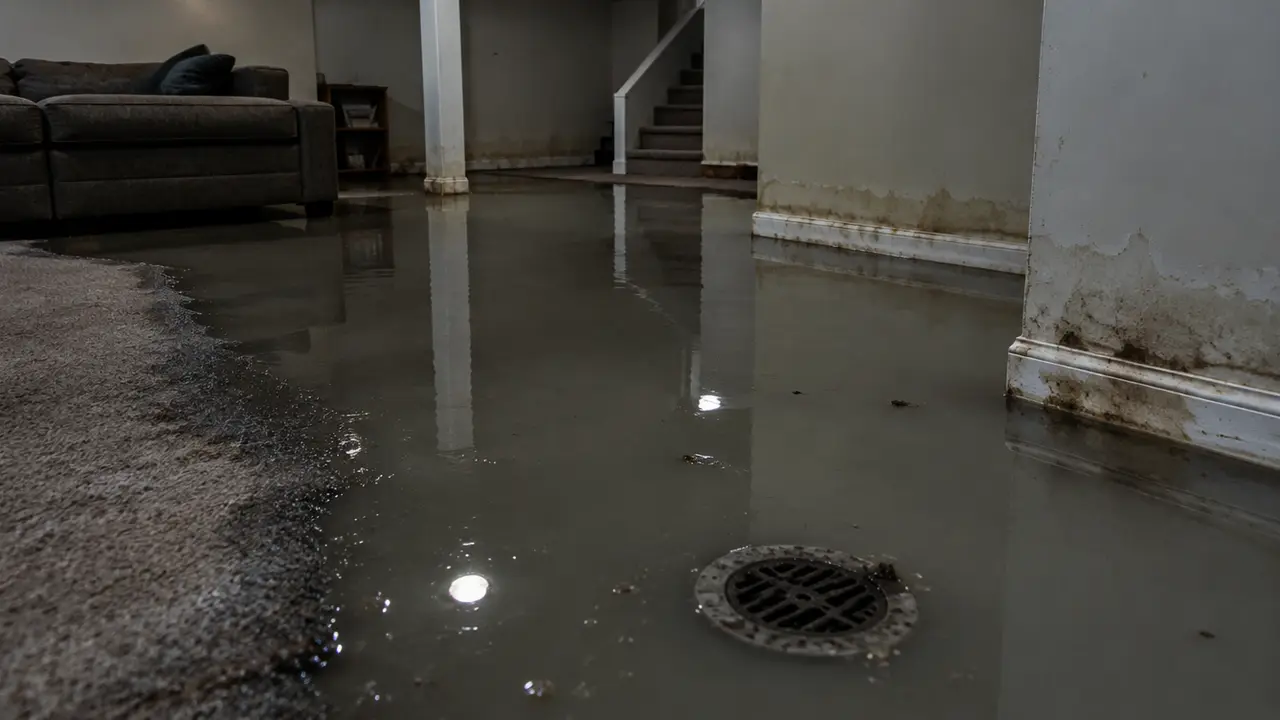
01 /What should you do in the first ten minutes of a sewage backup?
In the first ten minutes, protect people, stop the water and avoid electrical contact. Everything else, including the smell and the mess, can wait until those three are handled. The steps below are the ones that prevent injury and stop the damage from growing.
- Get people and pets out of the area
Children, pets, older relatives and anyone pregnant or unwell leave the basement and stay upstairs or out of the house.
- Stay away from wet electrical equipment
If water is near outlets, extension cords, the furnace, the water heater or the panel, do not go down. Call your electric utility or an electrician to make it safe.
- Stop every source of water
No flushing, showers, laundry, dishwasher or sink use anywhere in the building. Some owners also close the main water valve so nobody forgets.
- Warn everyone who shares the line
In a duplex, row house or condo, tell neighbours and the property manager, since their drains may feed the same pipe.
- Open windows if it is safe to reach them
Fresh air thins the odour and humidity. Do not walk through sewage to get to a window.
02 /Should you turn off the main water supply?
Closing the main water valve is a sensible precaution but not a cure. Sewage backs up because the drain is blocked or the city sewer is overloaded; the supply pipe is not the source. Shutting the main simply guarantees that no one in the house, and no appliance on a timer, keeps sending water down the drains while the blockage is there.
Leave the main open if you need water for something essential and everyone in the household understands not to use the drains. Close it if there are children, guests or tenants who might flush out of habit. If instead clean water is pouring from a broken supply pipe, that is a different emergency with its own steps; see the sister site BurstPipe.ca.
03 /What should you avoid doing during a sewage emergency?
Most injuries and most unnecessary costs in a sewage emergency come from a handful of well-meant mistakes. Avoid these until the line is flowing and the area is safe.
| Don't | Why | Do instead |
|---|---|---|
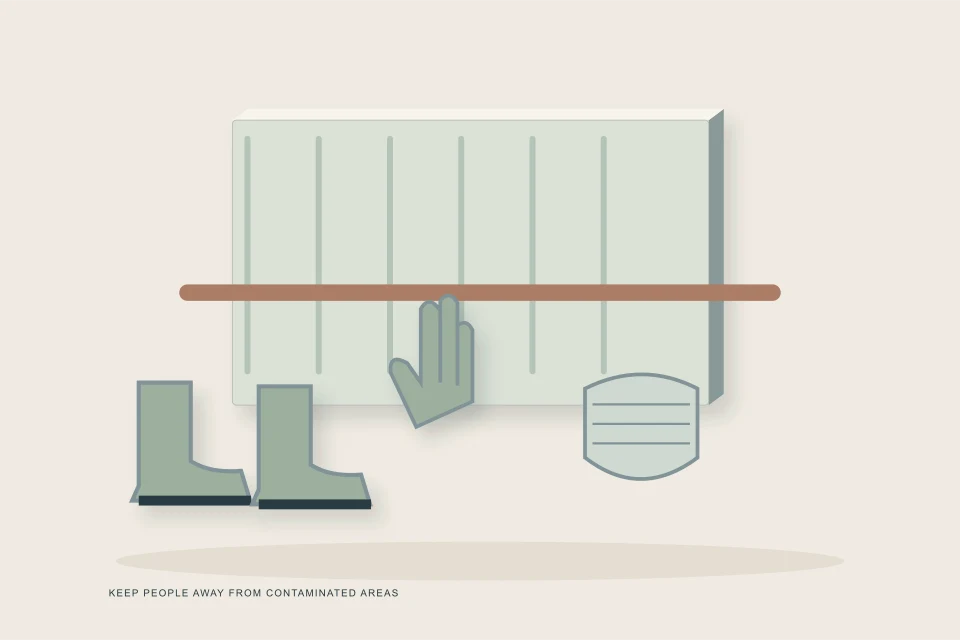
| Wade into sewage in running shoes or bare hands | Skin contact, cuts and hand-to-mouth transfer are how sewage makes people sick | Rubber boots, waterproof gloves, eye protection, a mask rated for the job |
| Plug in fans, pumps or a vacuum in the wet area | Standing water plus mains power is a shock and fire risk | Wait until the power is confirmed safe |
| Unscrew a cleanout cap on a full line | The cap releases sewage under pressure | Let the drain technician open it with a plan |
| Force a rental auger down a main line in a flooded basement | Rotating cable injuries and a bigger spill | Call a drain or sewer contractor |
| Keep using toilets and sinks upstairs | All that water ends up at the lowest drain | Stop water use until the line is cleared |
| Pour chemical drain opener into the floor drain | It rarely reaches the blockage and creates a hazard for whoever opens the line | Leave clearing to the contractor |
| Throw out damaged items before photographing them | The claim depends on showing what was lost | Photograph first, then remove |
Clearing the line is its own specialty. The sister site SewerCleaners.ca covers how a main-line clearing works and what to ask the technician.
04 /Who should you call, and in what order?
Call whoever can stop the water first, then whoever pays for the damage. If sewage is still coming up, the priority is a drain or sewer contractor, or your municipality if the problem may be on the city side. If the water has stopped, your insurer can come first and may direct which cleanup company to use.
| Call | When | What to ask or say |
|---|---|---|
| Electric or gas utility, or 911 | Any electrical danger, gas smell or medical concern | Describe the water level and where it is relative to the panel or appliances |
| Your municipality (311 in many cities) | Neighbours are affected, water rises during heavy rain, or you suspect the city main | Ask whether a crew will check the city side and whether a service call can be charged to you |
| Drain or sewer contractor | Your own line is blocked, or the city says the main is flowing | Ask for clearing to the city connection and, ideally, a camera inspection |
| Insurer or broker | Same day, once people are safe | Record the claim number; ask whether they approve the cleanup contractor |
| Restoration company | After the line flows and your insurer agrees, or right away if there is no coverage | Ask for a written scope, moisture readings and a drying plan |
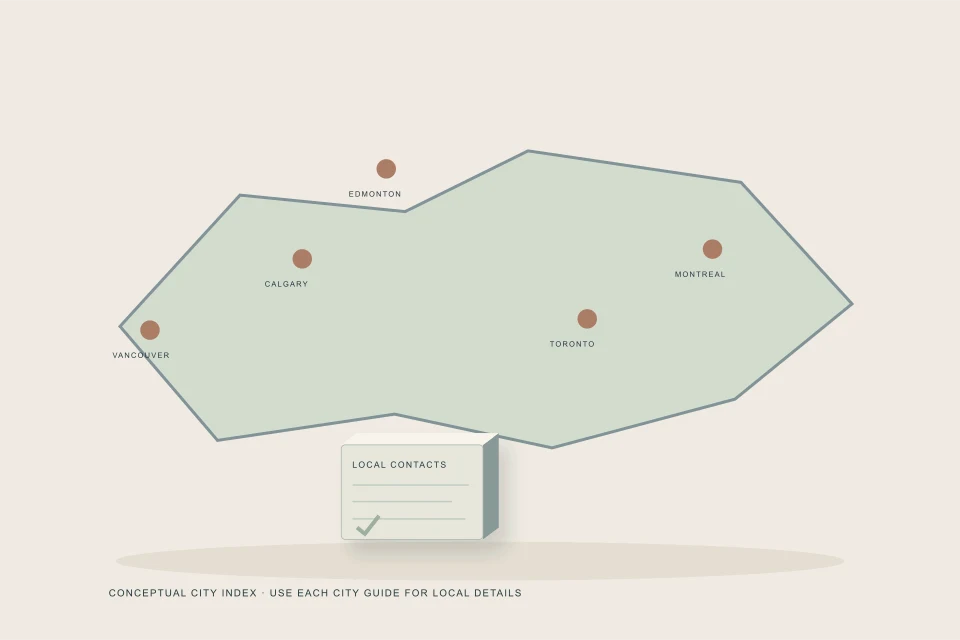
Cities handle these calls in different ways. Vancouver's rule that only a property owner can request a sewer crew, or Edmonton's utility line run by EPCOR, are examples. The city guides explain the local routing for Toronto, Vancouver, Montréal, Calgary and Edmonton.
05 /What evidence should you record before cleanup starts?
Record the water, the source and the damage before anyone moves anything. A few minutes of photos and notes are worth more to a claim than any later explanation.
- Wide photos of each affected room from the doorway, then close-ups of the water line on walls and furniture.
- The drain, toilet or fixture where the water came up, with the water visible.
- Every damaged item of value, with a label or serial number where visible.
- A short video walking through the space with the date spoken aloud.
- Notes: when you noticed the water, what was running at the time, whether it was raining, and whether neighbours were affected.
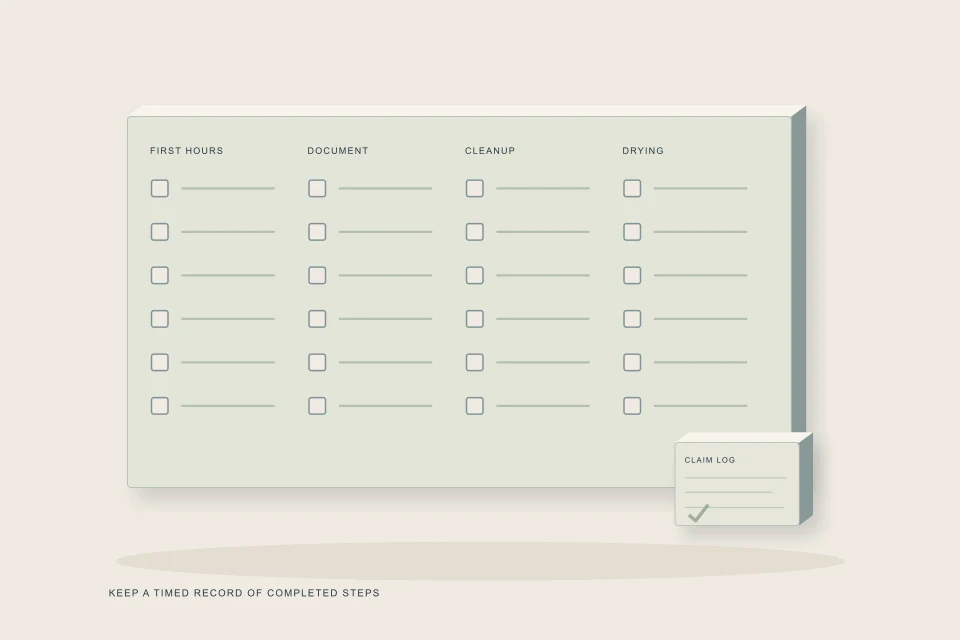
The Sewage Backup Checklist timestamps each step as you tick it, and documenting water damage for insurance goes further on inventories and receipts.
06 /When is it safe to start cleaning up?
Cleanup can start when three things are true: the line is flowing, the electrical situation is confirmed safe, and your insurer has had the chance to see or record the damage. Starting earlier risks a second flood, an injury, or a disputed claim.
Then decide who does the work. A small patch of sewage on sealed concrete in a home without vulnerable people can be an owner job with proper protection. Sewage on carpet, drywall or furniture, a large area, or a delay of more than 48 hours usually means a restoration professional. The Sewage Cleanup Triage applies those rules to your answers in under a minute, and DIY versus professional cleanup explains the reasoning.
Health Canada's flood cleanup advice is blunt on one point: children, pregnant women and people with respiratory problems should never handle water and materials contaminated by sewage. Plan the cleanup around who is in the house, not just around the mess. When you are ready, you can send a request with photos.
FAQQuestions people ask
Is a sewage backup an emergency even if it stopped on its own?
Treat it as urgent. The contamination is still there, and wet materials start growing mould within a day or two. Stop water use until you know the line is clear.
Can I flush the toilet once the floor drain stops gurgling?
Not until the line has been cleared or the city confirms the main is flowing. A quiet drain can still be blocked further down.
Should I call 911 for a sewage backup?
Only for immediate danger: a gas smell, electrical hazard, fire risk or someone unwell. For the backup itself, call your municipality's service line, a drain contractor and your insurer.
What protective gear do I need to go into the basement?
Rubber boots, waterproof gloves, eye protection and a mask suited to the work. Cover cuts and wash hands thoroughly afterwards.
Can I stay in the house during a sewage backup?
Often, if the sewage is confined to the basement, the power is safe and no vulnerable people are exposed. If the odour is strong or the area is large, staying elsewhere is safer.
NETWORKGo deeper across the HAUSE Sewer network
Sewer backup: what to do in the first hour
What to do in the first hour of a sewer backup: electrical safety, stopping water use, calling a sewer cleaner, insurance photos, health and cleanup.
PipeCleaning.caChemical drain cleaners: why they damage pipes and harm people
Chemical drain cleaners explained: how caustic, acid and bleach openers work, how they damage pipes, their burn and gas hazards, and what to do instead.
SewerJetting.caHow to use a drain jetter: a safety-first walkthrough for rental units
How to use a drain jetter or rented sewer jetter: setup, nozzle choice, feeding and pulling hose, and the stop rules that help prevent injection injuries.