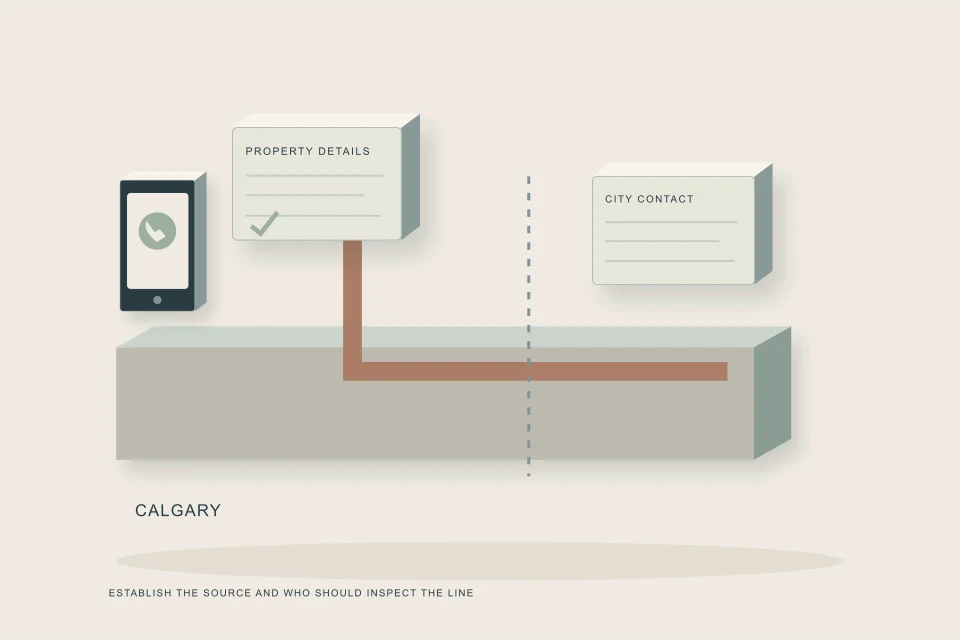
In Calgary, protect people from exposure first, with gloves, boots and a mask, then call 311. The agent helps decide whether you need a private plumber or a City inspection of its sewer. Call your insurer too. The City maintains the public sewer; owners are responsible for plumbing and service lines on their property, and City crews will not pull back carpet or open drywall to find the source.
- Calgary's order is: protect people, call 311, call your insurer.
- 311 triages whether the problem is your plumbing or something the City should inspect.
- The City maintains public sewer infrastructure; the service line and plumbing on your property are yours.
- City crews will not move furniture, pull back carpet, remove toilets or cut drywall to find a source.
- The City recommends a backwater valve on below-grade fixtures to limit sewage damage.
01 /What does the City of Calgary ask you to do in a sewage backup?
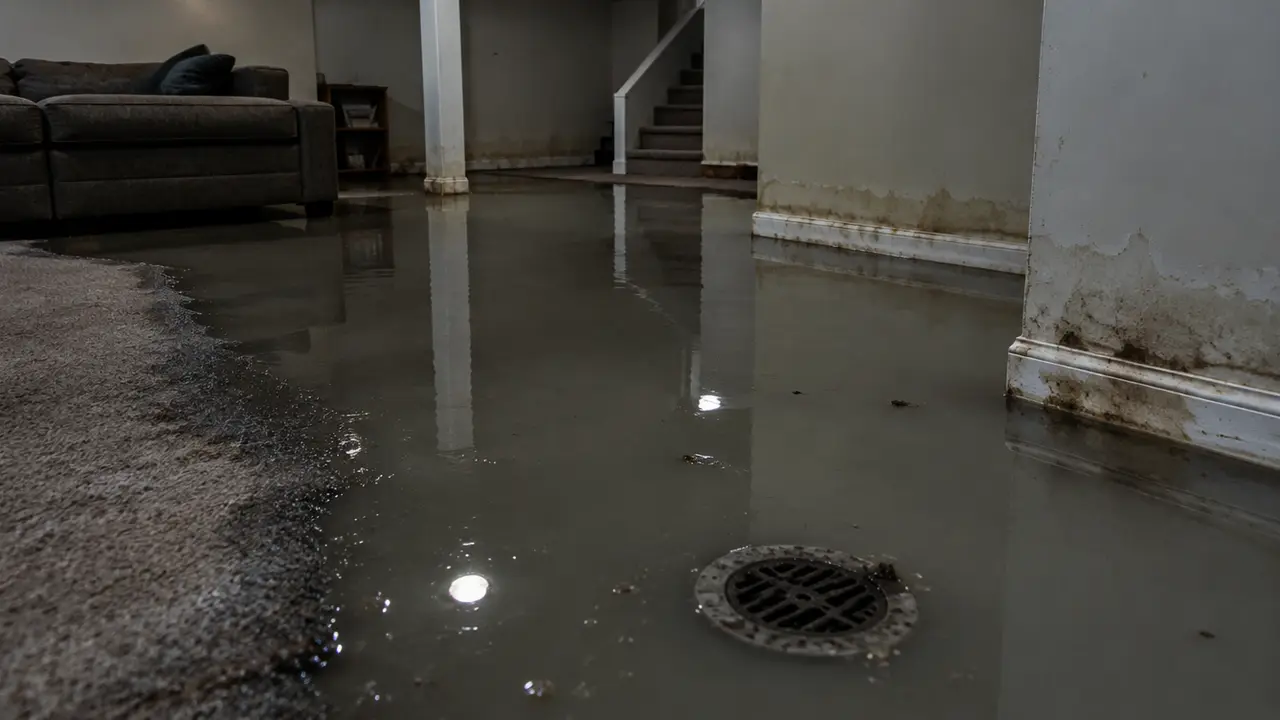
The City of Calgary's sewage backup page gives three steps in order: protect people from exposure, call 311, and contact your insurance company. It specifically lists rubber gloves, boots and a mask as the protective gear, and it warns that contaminated water may contain harmful bacteria and pathogens.
- Protect people
Keep children, pets and anyone vulnerable upstairs. Anyone who goes down wears rubber gloves, boots and a mask; add eye protection.
- Stop using water
Every drain upstairs empties toward the basement. Hold off on flushing, showers, laundry and the dishwasher.
- Call 311
The agent helps work out whether it is an internal plumbing problem for a private plumber or a possible City infrastructure issue that needs an inspection.
- Call your insurer
Get a claim number, ask whether they want to see the damage first, and ask about approved cleanup companies.
- Photograph before cleanup
The water level, the drain it came from, and every damaged item.
02 /Who owns which part of the sewer line in Calgary?
The City of Calgary maintains the public sewer infrastructure, and owners are responsible for the private plumbing and service lines on their property. The City's Protect Your Pipes page makes the same point from the cost side: homeowners pay to fix clogged sewer pipes located on their own property.
| Part | Responsible | Cleanup implication |
|---|---|---|
| Public sewer main and City infrastructure | City of Calgary | 311 can arrange an inspection if the City side is suspected |
| Service line on your property | Owner | Clearing and repair by your plumber, at your cost |
| Plumbing, floor drain and backwater valve inside | Owner | Keep the valve accessible and maintained |
| Finishes and belongings in the basement | Owner, and insurer if covered | Sewer backup cover is an optional add-on in most policies |
For the exact point where the City's responsibility starts at your address, ask 311 rather than relying on a general diagram. The sister site CalgarySewers.ca maps the City's own data on service lines by community.
03 /What will a City of Calgary crew do, and what won't it do?
If 311 arranges an inspection, the crew looks at City infrastructure. The City's page is explicit that crews will not move furniture, pull back carpet, remove toilets or make holes in drywall to identify the source of a backup. That work, if it is needed, falls to you, your plumber or your restoration company.
- Clear a path to the floor drain and any cleanout before the crew arrives, if you can do so safely.
- Do not start removing carpet or drywall before photographing it and speaking with your insurer.
- If a toilet has to come off for access, a plumber does that, and it adds a contaminated fixture to clean and reset.
- Ask the crew what they found on the City side and note the name and time.
The City's scale gives context. On its Protect Your Pipes page, Calgary says it responds to over 8,000 sewer backups a year and spends about $3 million repairing damage caused by blockages. Most of those start with what goes down household drains; the City's own summary is that only pee, poo and toilet paper belong in the toilet.
04 /How do you clean a Calgary basement after sewage?
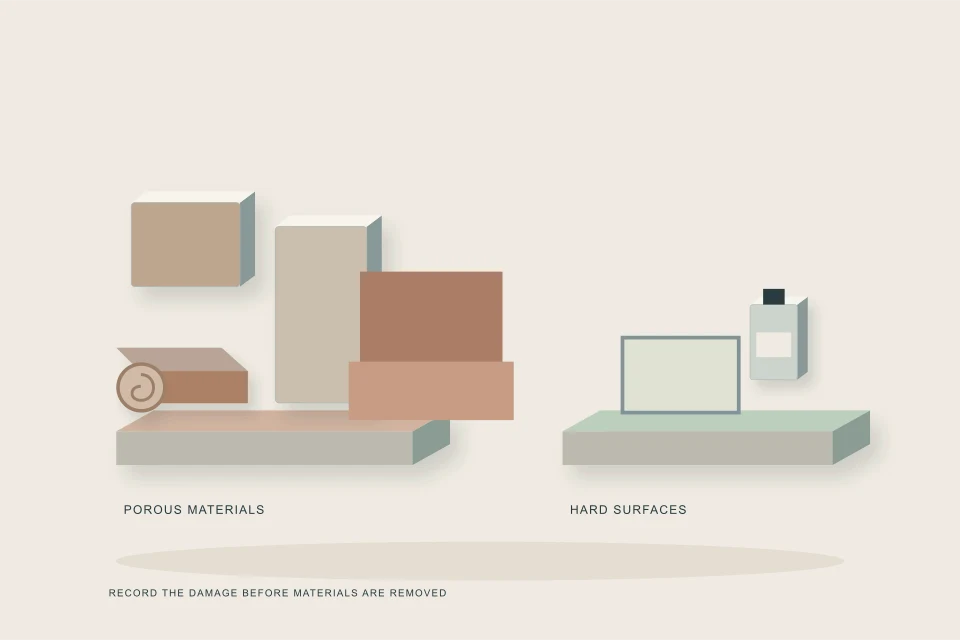
Clean a Calgary basement the way public-health guidance describes anywhere in Canada: remove what sewage ruined, clean and disinfect what stays, and dry it all within about two days. Calgary's climate helps with the last step for much of the year, because dry prairie air and chinook winds pull moisture out quickly once windows can be opened and the heat is on.
| Material | Usual approach | Calgary note |
|---|---|---|
| Concrete slab and foundation walls | Clean, disinfect, dry | Many older inner-city basements are partly unfinished; that helps |
| Carpet and underlay | Discard | Photograph and note the square footage for the claim |
| Drywall and insulation on stud walls | Cut out above the wet band | Check the bottom plate for wicking, especially on developed basements |
| Laminate or vinyl plank over the slab | Usually lifted | Water and sewage sit underneath and cannot dry there |
| Furnace and water heater | Inspection before use | A gas technician should check any appliance water reached |
Health Canada says a house and its furnishings are less likely to grow mould if they are dried within 48 hours, and that children, pregnant women and people with respiratory problems should never handle sewage-contaminated materials. Use the Sewage Cleanup Triage to decide between an owner cleanup and a professional one, and see what to throw away for the item-by-item list.
05 /Is there a backwater valve subsidy in Calgary?
We did not find a City of Calgary backwater valve subsidy on calgary.ca as checked September 2026. Some private websites describe one; treat those claims with caution until 311 or the City's own site confirms it. What the City does say, on its sewage backup page, is that installing a backwater valve on below-grade fixtures helps eliminate costly sewage damage.
If the backup came from the City side and you already have a valve, the flood may have left debris in it. Have it opened and cleaned as part of recovery. The reasoning is in backwater valves after a sewage backup, and planning costs for installation are on the sewage cleanup cost page.
06 /What about Airdrie, Chestermere, Cochrane and Okotoks?
The previous version of this page listed Airdrie, Chestermere, Cochrane and Okotoks as part of a Calgary coverage area with a local phone number and response times. Those claims have been removed. Each of those towns runs its own utility and service line, and the City of Calgary's 311 does not handle their sewers.
Edmonton works differently again, with EPCOR operating the drainage utility; see the Edmonton guide. Other cities are on the locations page. HAUSE is an information and request network and does not operate cleanup crews; if you want help lining up cleanup quotes, you can send a request with photos and the area affected.
FAQQuestions people ask
Should I call 311 or a plumber first for a Calgary sewage backup?
Calgary's guidance is to call 311, whose agent helps determine whether you need a private plumber or whether the City should inspect its infrastructure.
Will a City of Calgary crew pull up my carpet to find the problem?
No. The City says crews will not move furniture, pull back carpet, remove toilets or make holes in drywall to identify the source.
Who pays to clean up sewage in a Calgary basement?
The owner, through sewer backup insurance if the policy includes it. If you believe City infrastructure caused the backup, report it through 311 and ask about the City's claims process.
What protective gear does Calgary recommend for sewage?
The City lists rubber gloves, boots and a mask. Eye protection and covering any cuts are sensible additions.
Does Calgary's dry climate mean I can skip dehumidifiers?
Not in a basement. Dry outdoor air helps, but a closed basement after a flood still needs active drying and moisture readings to hit the 48-hour window.