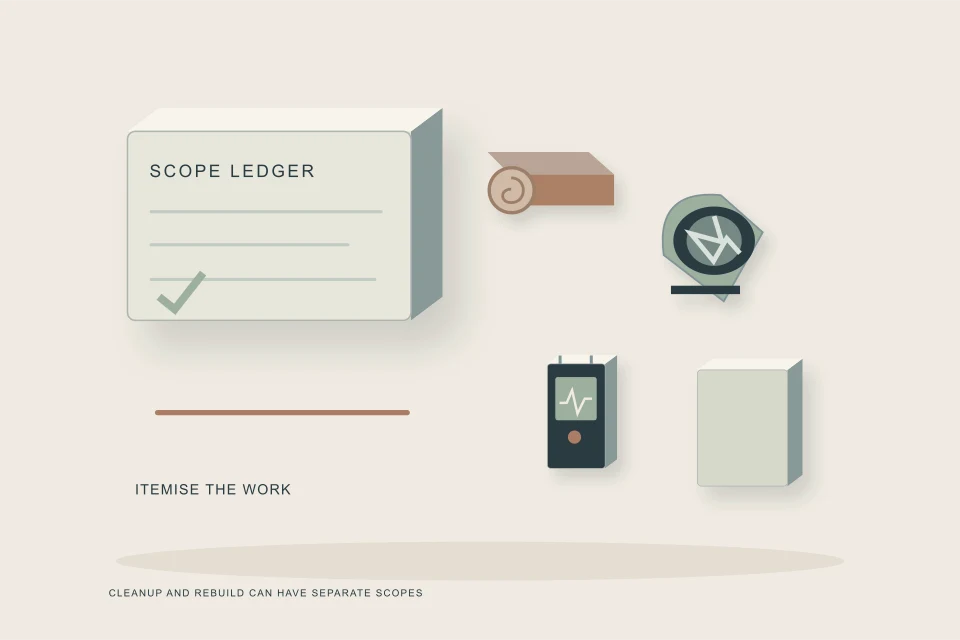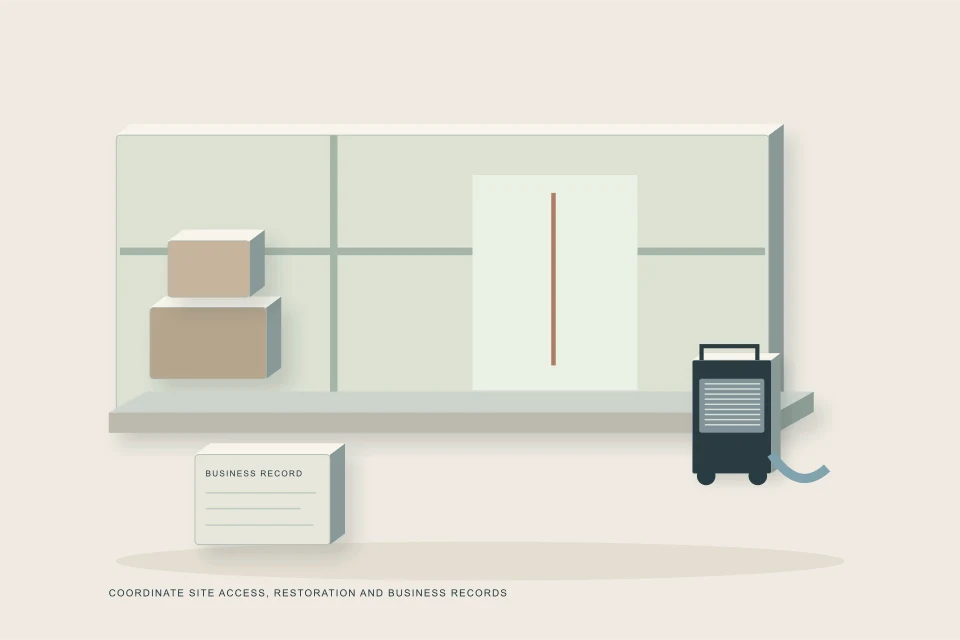
Commercial sewage cleanup follows the same sequence as a home job, assessment, extraction, removal, disinfection and drying, but adds business concerns: isolating the affected area so the rest can keep running, protecting staff and the public, meeting any health-inspection requirements before reopening, and documenting losses for property and business interruption claims. Planning those pieces early shortens downtime.
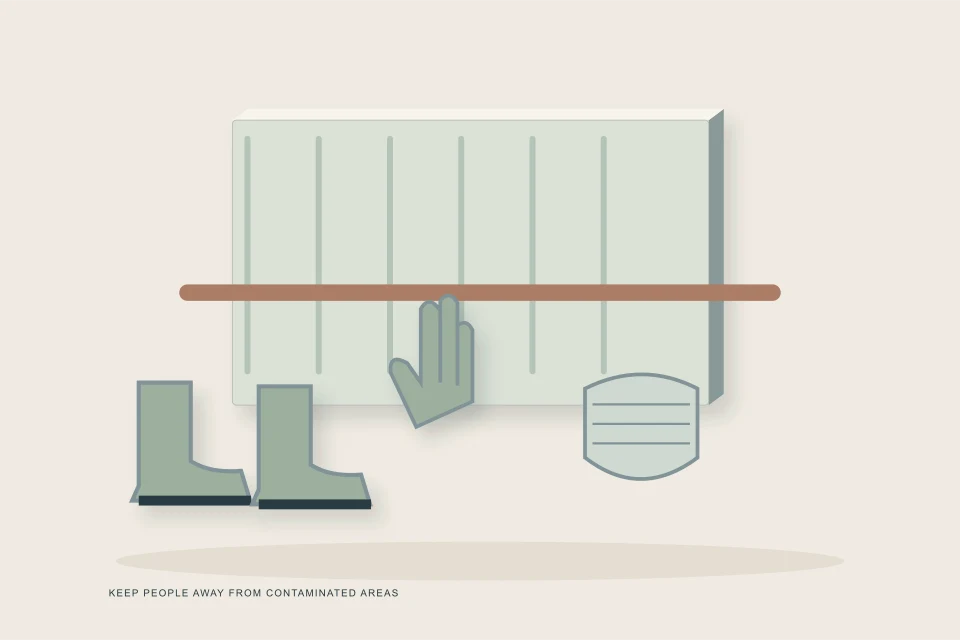
- Contain first: sealing off the affected area can keep the rest of a building open.
- Restorers commonly classify sewage as the most contaminated category of water, which drives removal decisions.
- Food premises and health facilities should confirm with their local public health unit before reopening.
- Workers doing cleanup fall under provincial occupational health and safety rules, not household advice.
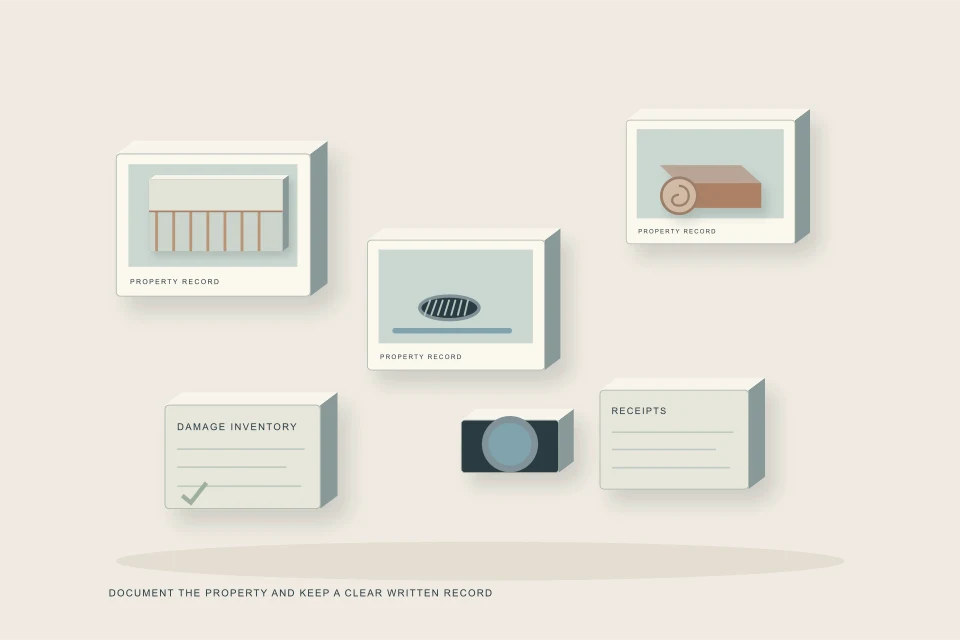
- Separate records for property damage, contents, stock and lost income make business claims easier.
01 /How does commercial sewage cleanup differ from a home job?
Commercial sewage cleanup differs mainly in scale, people and timing. The chemistry of cleaning sewage off a floor is the same in a restaurant as in a basement, but a business has staff, customers, stock, equipment, a landlord or property manager, and a cost for every hour it stays closed.
| Issue | Typical home | Typical business |
|---|---|---|
| Who decides | Owner and insurer | Tenant, landlord or property manager, and one or more insurers |
| People exposed | Household | Staff, customers, other tenants, the public |
| Timing | As soon as possible | Often overnight or on weekends to limit closure |
| Contents | Furniture and belongings | Stock, records, equipment, fixtures |
| Reopening | When dry and clean | May require sign-off, especially for food or health uses |
| Claims | Property and contents | Property, contents, stock and business interruption |
The biggest commercial difference is often the building itself. Multi-tenant buildings share drains, so a backup in one unit can start upstream in another, and the landlord or property manager usually controls access to the cleanouts, the mechanical room and the building insurance.
Offices, retail, restaurants, hotels, warehouses, manufacturing, medical facilities, schools and government buildings can all face a sewage backup. The sections below explain which extra steps each kind of use tends to bring.
02 /What happens in a commercial sewage assessment?
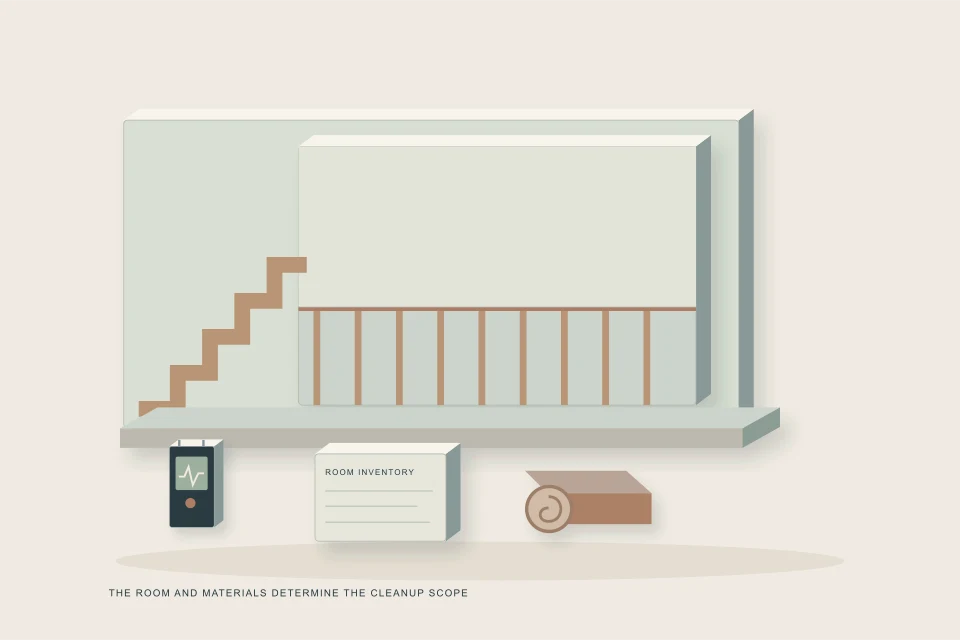
A commercial assessment establishes where the sewage came from, how far it spread, what it touched and what the business needs to keep running. It should end with a written scope and a plan for containment and access.
- Walkthrough and documentation: photos and video of every affected room, including ceilings below any upper-floor overflow.
- Water classification: restoration contractors commonly work to the ANSI/IICRC S500 water damage standard and classify sewage as the most contaminated category, which means porous materials are removed rather than dried.
- Moisture mapping: readings across floors and walls show how far water travelled, including under flooring and into adjacent units.
- Source and cause: confirmation that the line has been cleared and, ideally, a camera inspection showing why it blocked.
- Operational plan: which areas can stay open, how staff and customers will be kept away, and when work can happen.
For restaurants, grease is a frequent contributor. A poorly maintained grease interceptor or grease in the building drain can cause repeat backups, so it belongs in the cause investigation. The sister site SewerCleaners.ca covers commercial grease and line maintenance.
03 /How can a business keep operating during sewage cleanup?
A business keeps operating by isolating the affected area and scheduling the noisiest, dirtiest work around opening hours. Whether that is possible depends on where the sewage reached and what the space is used for.
- Seal off the area
Plastic containment and a separate entrance for workers keep contamination and odour out of the rest of the building.
- Protect the air system
Ask whether supply and return vents in the affected area should be closed or filtered while work is under way.
- Move stock and records
Anything untouched is moved out early; anything touched by sewage is photographed and listed before disposal.
- Stage the work
Extraction and tear-out often happen outside business hours; drying equipment may run while the business is open if it is contained and safe.
- Communicate
Tell staff, other tenants and, where relevant, customers what is closed and why.
If sewage reached a kitchen, food storage, patient areas or washrooms that customers use, partial operation may not be appropriate. Food businesses and health facilities should check with their local public health unit about cleaning requirements and reopening before serving the public again.
04 /What safety rules apply to staff during a commercial cleanup?
Workplace safety law, not household advice, applies when employees are involved. In Canada, occupational health and safety is regulated provincially, so the employer should confirm its obligations with its provincial regulator before asking staff to handle any part of a sewage cleanup.
- Do not ask untrained staff to handle sewage or sewage-soaked materials; leave that to the cleanup contractor.
- Keep staff out of the contained area and away from drying equipment cords and hoses.
- Watch for electrical hazards where water reached outlets, equipment or panels, and have an electrician check before re-energizing.
- Remember that some staff may be pregnant or have respiratory conditions; Health Canada advises that such people should never handle sewage-contaminated water or materials.
- Record who entered the area and when, in case anyone becomes ill.
05 /How should a business document a sewage loss for insurance?
Document the building, the contents and the lost business as three separate records. Commercial policies commonly treat them under different coverages, and a mixed-up record slows the claim.
| Record | What it should show | Who usually has it |
|---|---|---|
| Property damage | Photos, moisture logs, restorer's scope and invoices | Owner or landlord, with the restorer |
| Contents and stock | Itemized list with quantities, cost and photos before disposal | The business |
| Equipment | Model and serial numbers, repair or replacement quotes | The business |
| Business interruption | Dates closed or limited, normal sales for comparison, extra expenses | The business and its accountant |
| Cause | Drain contractor's report, camera footage, any municipal report | Whoever arranged the clearing |
Whether sewer backup is covered, and at what limit, depends on the policy. For homes, the Insurance Bureau of Canada notes that sewer and drain backup is typically not covered by a standard policy unless added as an option; business policies vary just as much, so check the wording and limits with your broker. The documentation guide covers photos and inventories in more depth.
06 /How do you choose a commercial sewage cleanup contractor?
Choose on scope, capacity and records rather than speed promises. Ask for a written scope with containment details, the drying plan, the disposal method, and how moisture will be measured and reported. Ask whether they can work after hours and how many people and machines they can commit to your site.
Confirm liability insurance and provincial workers' compensation coverage before work starts, and ask for references on jobs of similar size and use. The broader checklist, including what to watch for in contracts and direction-to-pay forms, is in working with a restoration company. For home-scale jobs, see residential sewage cleanup. You can send a request describing the premises, the area affected and your hours.
FAQQuestions people ask
Can my shop stay open during a sewage cleanup?
Sometimes, if the affected area can be sealed off and customers never pass through it. Food, health and customer washroom areas usually need to close until cleaned and dry.
Who is responsible for sewage cleanup in a leased commercial unit?
The lease decides. Often the landlord handles the building and the tenant handles its own contents and improvements; check the lease and both insurance policies.
Do restaurants need an inspection before reopening after sewage?
Check with your local public health unit. Food premises are regulated, and contamination of food areas may require specific cleaning and approval before reopening.
Should staff help with a commercial sewage cleanup?
Not with handling sewage or soaked materials. Provincial workplace safety rules apply, and the work belongs to a trained contractor with proper protective equipment.
Who notifies other tenants when sewage backs up in a shared building?
Usually the landlord or property manager, who controls the common drains. Tenants should report the backup to management immediately and stop water use in their own unit.
What does water category mean on a commercial cleanup scope?
It describes how contaminated the water is. Sewage is treated as the most contaminated category, which is why porous materials are removed instead of dried.
NETWORKGo deeper across the HAUSE Sewer network
Sewer backup: what to do in the first hour
What to do in the first hour of a sewer backup: electrical safety, stopping water use, calling a sewer cleaner, insurance photos, health and cleanup.
SewerRoots.caWhose tree, whose pipe: who pays when roots block a sewer line
Who is responsible when a city or neighbour's tree sends roots into your sewer line: the general Canadian pattern, the evidence, and how to raise it.
PipeCleaning.caCondo and apartment drain stack cleaning
Condo and apartment drain stack cleaning: why kitchen stacks back up on lower floors, how stacks are jetted or descaled, and how boards schedule it.